Filter by
Models for Physics of the Very Small and Very Large
This monograph tackles three challenges. First, show a mathematics-based meta-model that matches known elementary particles. Second, apply models, based on the meta-model, to match other known physics data. Third, predict future physics data. The math features solutions to isotropic pairs of isotropic quantum harmonic oscillators. This monograph matches some solutions to known elementary partic…
- Edition
- 1
- ISBN/ISSN
- 978-94-6239-165-9
- Collation
- XII, 382
- Series Title
- Atlantis Studies in Mathematics for Engineering and Science
- Call Number
- -
Modifications of Einstein's Theory of Gravity at Large Distances
In the last few years modified gravity theories have been proposed as extensions of Einstein's theory of gravity. Their main motivation is to explain the latest cosmological and astrophysical data on dark energy and dark matter. The study of general relativity at small scales has already produced important results (cf e.g. LNP 863 Quantum Gravity and Quantum Cosmology) while its study at large …
- Edition
- -
- ISBN/ISSN
- 978-3-319-10069-2
- Collation
- XVI, 426
- Series Title
- Lecture Notes in Physics
- Call Number
- -
Introduction to Particle and Astroparticle Physics: Questions to the Universe
This book, written by researchers who had been professionals in accelerator physics before becoming leaders of groups in astroparticle physics, introduces both fields in a balanced and elementary way, requiring only a basic knowledge of quantum mechanics on the part of the reader. The new profile of scientists in fundamental physics ideally involves the merging of knowledge in astroparticle…
- Edition
- -
- ISBN/ISSN
- 978-88-470-2688-9
- Collation
- -
- Series Title
- -
- Call Number
- -
A Stargazing Program for Beginners: A Pocket Field Guide
Sets out a simple month-by-month program to reveal all of the night sky's biggest and most beautiful secrets in just one year – and with only a few hours of stargazing each month By investing just an hour a week and $50 in binoculars, it’s possible to learn a few simple techniques and quickly gain a real insight into the night sky's ever-changing patterns – and what they tell us about E…
- Edition
- -
- ISBN/ISSN
- 978-3-319-22072-7
- Collation
- XVI, 419
- Series Title
- Astronomer's Pocket Field Guide
- Call Number
- 520 CAR s
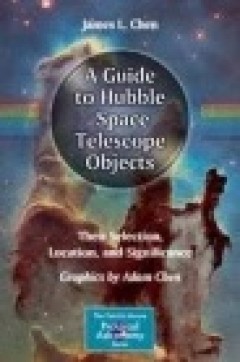
A Guide to Hubble Space Telescope Objects: Their Selection, Location, and Sig…
From the authors of "How to Find the Apollo Landing Sites," this is a guide to connecting the view above with the history of recent scientific discoveries from the Hubble Space Telescope. Each selected HST photo is shown with a sky map and a photograph or drawing to illustrate where to find it and how it should appear from a backyard telescope. Here is the casual observer's chance to locate the…
- Edition
- -
- ISBN/ISSN
- 978-3-319-18872-0
- Collation
- -
- Series Title
- The Patrick Moore Practical Astronomy Series
- Call Number
- 520 CHE g
Theoretical and Observational Consistency of Massive Gravity
This work is a detailed study of both the theoretical and phenomenological consequences of a massive graviton, within the ghost-free theory of massive gravity, the de Rham-Gabadadze-Tolley (dRGT) theory. Its aim is to test the physical viability of the theory. It begins by putting constraints on the parameters of the theory in the decoupling limit based on purely theoretical grounds, like class…
- Edition
- -
- ISBN/ISSN
- 978-3-319-18935-2
- Collation
- 23 b/w illustrations, 19 illustrations in colour
- Series Title
- -
- Call Number
- -
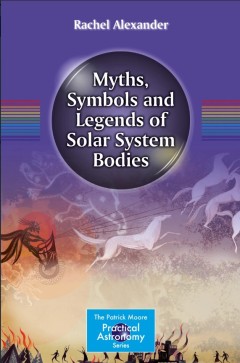
Myths, Symbols and Legends of Solar System Bodies
This book is an amateur astronomer’s guide to the mythology and symbolism associated with the celestial bodies in the Solar System, and even includes some of the legendary tales of people who had or have a connection with these objects. It explores different cultures (for example, the Greco-Roman and the Norse) and different times and how stories were used to explain the worlds they saw above…
- Edition
- 1
- ISBN/ISSN
- 978-1-4614-7066-3
- Collation
- XVI, 234
- Series Title
- The Patrick Moore Practical Astronomy Series
- Call Number
- -

The Twenty-first Century in Space
This final entry in the History of Human Space Exploration mini-series by Ben Evans continues with an in-depth look at the latter part of the 20th century and the start of the new millennium. Picking up where Partnership in Space left off, the story commemorating the evolution of manned space exploration unfolds in further detail. More than fifty years after Yuri Gagarin’s pioneering journey …
- Edition
- -
- ISBN/ISSN
- 978-1-4939-1307-7
- Collation
- -
- Series Title
- -
- Call Number
- -
Modifications of Einstein's Theory of Gravity at Large Distances
In the last few years modified gravity theories have been proposed as extensions of Einstein's theory of gravity. Their main motivation is to explain the latest cosmological and astrophysical data on dark energy and dark matter. The study of general relativity at small scales has already produced important results (cf e.g. LNP 863 Quantum Gravity and Quantum Cosmology) while its study at large …
- Edition
- 1
- ISBN/ISSN
- 978-3-319-10069-2
- Collation
- XVI, 426
- Series Title
- Lecture Notes in Physics
- Call Number
- -
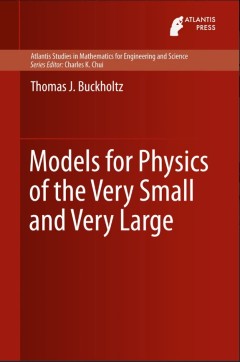
Models for Physics of the Very Small and Very Large
This monograph tackles three challenges. First, show a mathematics-based meta-model that matches known elementary particles. Second, apply models, based on the meta-model, to match other known physics data. Third, predict future physics data. The math features solutions to isotropic pairs of isotropic quantum harmonic oscillators. This monograph matches some solutions to known elementary partic…
- Edition
- 1
- ISBN/ISSN
- 978-94-6239-165-9
- Collation
- XII, 382
- Series Title
- Atlantis Studies in Mathematics for Engineering and Science
- Call Number
- -
 Computer Science, Information & General Works
  Philosophy & Psychology
  Religion
  Social Sciences
  Language
  Pure Science
  Applied Sciences
  Art & Recreation
  Literature
  History & Geography