Filter by

Europe Faces Europe Narratives from Its Eastern Half
Europe Faces Europe examines Eastern European perspectives on European identity. The contributors to this volume map narratives of Europe rooted in Eastern Europe, examining their relationship to philosophy, journalism, social movements, literary texts, visual art, and popular music. Moving the debate and research on European identity beyond the geographical power center, the essays explore how…
- Edition
- -
- ISBN/ISSN
- 9781783207510
- Collation
- -
- Series Title
- -
- Call Number
- -

Between Two Plenums : China’s Intraleadership Conflict, 1959–1962
The origins of the Cultural Revolution are still shrouded in uncertainty. Crucial questions either remain unanswered or have been given answers which derive from conflicting interpretations. To what period can the direct origins of the Cultural Revolution be traced? What issues, if any, divided the leadership, and how deep were these divisions? What was the state of power relations and what was…
- Edition
- -
- ISBN/ISSN
- 9780472902132
- Collation
- -
- Series Title
- -
- Call Number
- 951 JOF b

A People Passing Rude British Responses to Russian Culture
The essays in this stimulating collection attest to the scope and variety of Russia’s influence on British culture. They move from the early nineteenth century—when Byron sent his hero Don Juan to meet Catherine the Great, and an English critic sought to come to terms with the challenge of Pushkin—to a series of Russian-themed exhibitions at venues including the Crystal Palace and Earls C…
- Edition
- -
- ISBN/ISSN
- 9781909254121
- Collation
- -
- Series Title
- -
- Call Number
- -
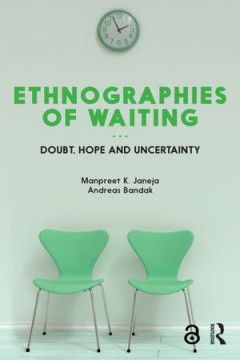
Ethnographies of Waiting Doubt, Hope and Uncertainty
We all wait – in traffic jams, passport offices, school meal queues, for better weather, an end to fighting, peace. Time spent waiting produces hope, boredom, anxiety, doubt, or uncertainty. Ethnographies of Waiting explores the social phenomenon of waiting and its centrality in human society. Using waiting as a central analytical category, the book investigates how waiting is negotiated in m…
- Edition
- -
- ISBN/ISSN
- 9781474280280
- Collation
- -
- Series Title
- -
- Call Number
- -
Work and Livelihoods History, Ethnography and Models in Times of Crisis
Winner of the Society for the Anthropology of Work book prize 2017 This volume presents a global range of ethnographic case studies to explore the ways in which - in the context of the restructuring of industrial work, the ongoing financial crisis, and the surge in unemployment and precarious employment - local and global actors engage with complex social processes and devise ideological, po…
- Edition
- -
- ISBN/ISSN
- 9781317602446
- Collation
- -
- Series Title
- -
- Call Number
- -

Meeting Ethnography Meetings as Key Technologies of Contemporary Governance,…
This volume asks and addresses elusive ontological, epistemological, and methodological questions about meetings. What are meetings? What sort of knowledge, identities, and power relationships are produced, performed, communicated, and legitimized through meetings? How do—and how might—ethnographers study meetings as objects, and how might they best conduct research in meetings as particula…
- Edition
- -
- ISBN/ISSN
- 1317195108
- Collation
- -
- Series Title
- -
- Call Number
- -

Human Extinction and the Pandemic Imaginary
This book develops an examination and critique of human extinction as a result of the ‘next pandemic’ and turns attention towards the role of pandemic catastrophe in the renegotiation of what it means to be human. Nested in debates in anthropology, philosophy, social theory and global health, the book argues that fear of and fascination with the ‘next pandemic’ stem not so much from an …
- Edition
- -
- ISBN/ISSN
- 9781000698886
- Collation
- -
- Series Title
- -
- Call Number
- -
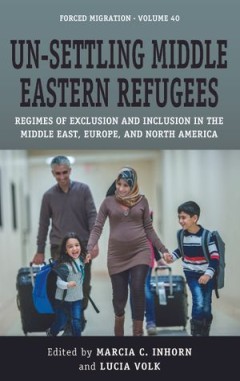
Un-settling Middle Eastern Refugees: Regimes of Exclusion and Inclusion in th…
Since the Iraq war, the Middle East has been in continuous upheaval, resulting in the displacement of millions of people. Arriving from Afghanistan, Iraq, Palestine, and Syria in other parts of the world, the refugees show remarkable resilience and creativity amidst profound adversity. Through careful ethnography, this book vividly illustrates how refugees navigate regimes of exclusion, includi…
- Edition
- -
- ISBN/ISSN
- 9781800730564
- Collation
- -
- Series Title
- -
- Call Number
- 301 UNS u
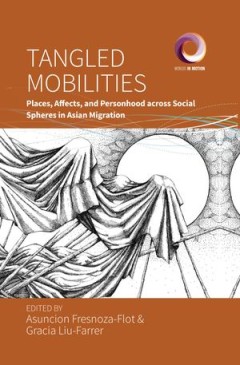
Tangled Mobilities: Places, Affects, and Personhood across Social Spheres in …
The emotional, social, and economic challenges faced by migrants and their families are interconnected through complex decisions related to mobility. Tangled Mobilities examines the different crisscrossing and intersecting mobilities in the lives of Asian migrants, their family members across Asia and Europe, and the social spaces connecting these regions. In exploring how the migratory process…
- Edition
- -
- ISBN/ISSN
- 9781800736689
- Collation
- -
- Series Title
- -
- Call Number
- 301 TAN t

Grazing Communities: Pastoralism on the Move and Biocultural Heritage Frictions
Pastoralism is a diffused and ancient form of human subsistence and probably one of the most studied by anthropologists at the crossroads between continuities and transformations. The present critical discourse on sustainable and responsible development implies a change of practices, a huge socio-economic transformation, and the return of new shepherds and herders in different European regions.…
- Edition
- -
- ISBN/ISSN
- 9781800736672
- Collation
- -
- Series Title
- -
- Call Number
- 301 GRA g
 Computer Science, Information & General Works
 Philosophy & Psychology
 Religion
 Social Sciences
 Language
 Pure Science
 Applied Sciences
 Art & Recreation
 Literature
 History & Geography