Filter by
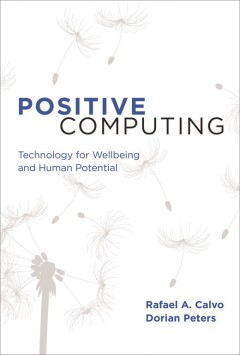
Positive computing : technology for wellbeing and human potential
"On the eve of Google's IPO in 2004, Larry Page and Sergey Brin vowed not to be evil. Today, a growing number of technologists would go further, trying to ensure that their work actively improves people's lives. Technology, so pervasive and ubiquitous, has the capacity to increase stress and suffering; but it also has the less-heralded potential to improve the well-being of individuals, society…
- Edition
- -
- ISBN/ISSN
- 0262325683
- Collation
- 1 online resource (x, 288 pages).
- Series Title
- -
- Call Number
- -
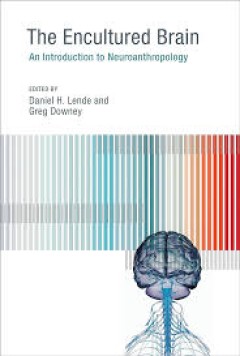
The Encultured Brain: An Introduction to Neuroanthropology
Basic concepts and case studies from an emerging field that investigates human capacities and pathologies at the intersection of brain and culture.OCLC-licensed vendor bibliographic record.
- Edition
- -
- ISBN/ISSN
- 9780262305679
- Collation
- 1 online resource (ix, 438 pages) :illustrations
- Series Title
- -
- Call Number
- -
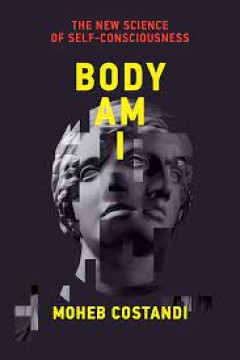
Body Am I: The New Science of Self-Consciousness
"Costandi explains the neuroscience behind how we view our selves and our bodies, drawing from neurological studies on our sense of agency and free will, the neural correlates of mental representations, mirror neurons, and how the brain perceives timing and sensory consequences. He explores case studies of amputees with phantom limb syndrome, people with Body Integrity Identity Disorder (who ha…
- Edition
- -
- ISBN/ISSN
- 9780262368711
- Collation
- 1 online resource
- Series Title
- -
- Call Number
- -

Whistled Languages A Worldwide Inquiry on Human Whistled Speech
The main focus of this monograph on whistled speech is the result of a worldwide inquiry primarily based on the author’s unprecedented fieldwork and laboratory experience. The different questions raised by the origin and the evolution of whistled forms of languages are also explored, including the role of environmental constraints in the emergence of whistled speech, their phonetic and phonol…
- Edition
- -
- ISBN/ISSN
- 978-3-662-45837-2
- Collation
- -
- Series Title
- -
- Call Number
- -

The brain abstracted :simplification in the history and philosophy of neurosc…
"An opinionated history of neuroscience, which argues that--due to the brain's complexity--neuroscientific theories have only captured partial truths, and therefore "neurophilosophy" is unlikely to be achieved"--OCLC-licensed vendor bibliographic record.
- Edition
- -
- ISBN/ISSN
- 9780262378628
- Collation
- 1 online resource
- Series Title
- -
- Call Number
- -
How your brain works :a step-by-step guide to hands-on neuroscience experimen…
Includes index."A fun, informative, illustrated guide to hands-on experiments for home or the classroom that explain the principles of neuroscience; including electrophysiology, neuroengineering, & neuroethology"--OCLC-licensed vendor bibliographic record.
- Edition
- -
- ISBN/ISSN
- 9780262371285
- Collation
- 1 online resource
- Series Title
- -
- Call Number
- -
Intervention in the brain :politics, policy, and ethics
The political and policy implications of recent developments in neuroscience, including new techniques in imaging and neurogenetics. New findings in neuroscience have given us unprecedented knowledge about the workings of the brain. Innovative research--much of it based on neuroimaging results--suggests not only treatments for neural disorders but also the possibility of increasingly precise an…
- Edition
- -
- ISBN/ISSN
- 0262313731
- Collation
- 1 online resource (370 pages).
- Series Title
- -
- Call Number
- -
A hole in the head :more tales in the history of neuroscience
Essays on great figures and important issues, advances and blind alleys-from trepanation to the discovery of grandmother cells-in the history of brain sciences.OCLC-licensed vendor bibliographic record.
- Edition
- -
- ISBN/ISSN
- 9780262258852
- Collation
- 1 online resource (x, 356 pages) :illustrations
- Series Title
- -
- Call Number
- -
Moral psychology.
"For much of the twentieth century, philosophy and science went their separate ways. In moral philosophy, fear of the so-called naturalistic fallacy kept moral philosophers from incorporating developments in biology and psychology. Since the 1990s, however, many philosophers have drawn on recent advances in cognitive psychology, brain science, and evolutionary psychology to inform their work. T…
- Edition
- -
- ISBN/ISSN
- 9780262302951
- Collation
- 1 online resource
- Series Title
- -
- Call Number
- -
Moral psychology.
"For much of the twentieth century, philosophy and science went their separate ways. In moral philosophy, fear of the so-called naturalistic fallacy kept moral philosophers from incorporating developments in biology and psychology. Since the 1990s, however, many philosophers have drawn on recent advances in cognitive psychology, brain science, and evolutionary psychology to inform their work. T…
- Edition
- -
- ISBN/ISSN
- 9780262302982
- Collation
- 1 online resource
- Series Title
- -
- Call Number
- -
 Computer Science, Information & General Works
  Philosophy & Psychology
  Religion
  Social Sciences
  Language
  Pure Science
  Applied Sciences
  Art & Recreation
  Literature
  History & Geography