Filter by
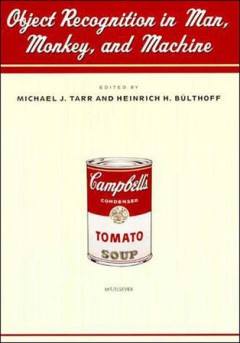
Object recognition in man, monkey, and machine
The contributors bring a wide range of methodologies to bear on the common problem of image-based object recognition. These interconnected essays on three-dimensional visual object recognition present cutting-edge research by some of the most creative neuroscientific, cognitive, and computational scientists in the field. Cassandra Moore and Patrick Cavanagh take a classic demonstration, t…
- Edition
- -
- ISBN/ISSN
- 9780262287609
- Collation
- 1 online resource (217 pages) :illustrations.
- Series Title
- -
- Call Number
- -
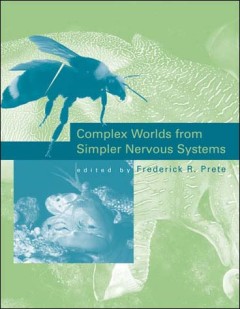
Complex Worlds from Simpler Nervous Systems
"A Bradford book."The authors of Complex Worlds from Simpler Nervous Systems explain how animals with small, often minuscule, nervous systems--jumping spiders, bees, praying mantids, toads, and others--are not the simple "reflex machines" they were once thought to be. Because these animals live in the same world as do much larger species, they must meet the same environmental challenges. They d…
- Edition
- -
- ISBN/ISSN
- 9780262281898
- Collation
- 1 online resource (xx, 436 pages) :illustrations (some color)
- Series Title
- -
- Call Number
- -
Computation and Cognition: Toward a Foundation for Cognitive Science
The question, "What is Cognitive Science?" is often asked but seldom answered to anyone's satisfaction. Until now, most of the answers have come from the new breed of philosophers of mind. This book, however, is written by a distinguished psychologist and computer scientist who is well-known for his work on the conceptual foundations of cognitive science, and especially for his research on ment…
- Edition
- -
- ISBN/ISSN
- 9780262281997
- Collation
- 1 online resource (xxiii, 292 pages) :illustrations
- Series Title
- -
- Call Number
- -
Wonder :childhood and the lifelong love of science
Description based upon print version of record."An explanation of where children's scientific intuitions come from and how they can be nurtured. Intended not just for scholars but science teachers and enthusiasts as well"--OCLC-licensed vendor bibliographic record.
- Edition
- -
- ISBN/ISSN
- 0262368455
- Collation
- 1 online resource (253 pages)
- Series Title
- -
- Call Number
- -
Productivity and Reuse in Language: A Theory of Linguistic Computation and St…
"Language allows us to express and comprehend an unbounded number of thoughts. This fundamental and much-celebrated property is made possible by a division of labor between a large inventory of stored items (e.g., affixes, words, idioms) and a computational system that productively combines these stored units on the fly to create a potentially unlimited array of new expressions. A language lear…
- Edition
- -
- ISBN/ISSN
- 9780262326803
- Collation
- 1 online resource (xii, 337 pages) :illustrations
- Series Title
- -
- Call Number
- -
Concepts, kinds, and cognitive development
In Concepts, Kinds, and Cognitive Development, Frank C. Keil provides a coherent account of how concepts and word meanings develop in children, adding to our understanding of the representational nature of concepts and word meanings at all ages. "A Bradford book."Includes indexes.OCLC-licensed vendor bibliographic record.
- Edition
- -
- ISBN/ISSN
- 9780262276900
- Collation
- 1 online resource (xv, 328 pages) :illustrations.
- Series Title
- -
- Call Number
- -
Connectionism and the Philosophy of Psychology
Human cognition is soft. It is too flexible, too rich, and too open-ended to be captured by hard (precise, exceptionless) rules of the sort that can constitute a computer program. In Connectionism and the Philosophy of Psychology, Horgan and Tienson articulate and defend a new view of cognition. In place of the classical paradigm that take the mind to be a computer (or a group of linked compute…
- Edition
- -
- ISBN/ISSN
- 9780262275675
- Collation
- 1 online resource (xiii, 207 pages) :illustrations
- Series Title
- -
- Call Number
- -
The working mind :meaning and mental attention in human development
"A magnum opus from one of Piaget's most important students. This books seeks to synthesize Piaget's psychology with findings in modern neuroscience to explain cognitive development"--OCLC-licensed vendor bibliographic record.
- Edition
- -
- ISBN/ISSN
- 0262363089
- Collation
- 1 online resource.
- Series Title
- -
- Call Number
- -
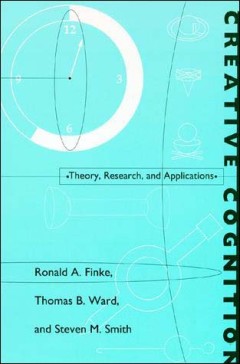
Creative Cognition: Theory, Research, and Applications
"A Bradford book."Creative Cognition combines original experiments with existing work in cognitive psychology to provide the first explicit account of the cognitive processes and structures that contribute to creative thinking and discovery.Creative Cognition combines original experiments with existing work in cognitive psychology to provide the first explicit account of the cognitive processes…
- Edition
- -
- ISBN/ISSN
- 9780262272650
- Collation
- 1 online resource (vii, 239 pages)
- Series Title
- -
- Call Number
- -
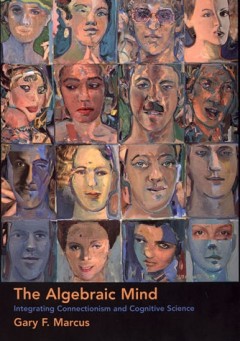
The algebraic mind :integrating connectionism and cognitive science
"A Bradford book."In The Algebraic Mind, Gary Marcus attempts to integrate two theories about how the mind works, one that says that the mind is a computer-like manipulator of symbols, and another that says that the mind is a large network of neurons working together in parallel. Resisting the conventional wisdom that says that if the mind is a large neural network it cannot simultaneously be a…
- Edition
- -
- ISBN/ISSN
- 9780262279086
- Collation
- 1 online resource (xiii, 224 pages) :illustrations.
- Series Title
- -
- Call Number
- -
 Computer Science, Information & General Works
  Philosophy & Psychology
  Religion
  Social Sciences
  Language
  Pure Science
  Applied Sciences
  Art & Recreation
  Literature
  History & Geography