Filter by

The Perfect Mango
In 1994, at the age of twenty-five, when the “terrible brokenness that comes with sexual assault” was folded deep within her body and thoughts of suicide were always close by, Erin Manning wrote The Perfect Mango at an almost feverish pitch: nineteen chapters in nineteen days, a sort of self-rescue operation, where writing became a form of making (and feeling) life otherwise. Throughout tho…
- Edition
- -
- ISBN/ISSN
- 978-1-950192-14-4
- Collation
- -
- Series Title
- -
- Call Number
- 928 MAN p
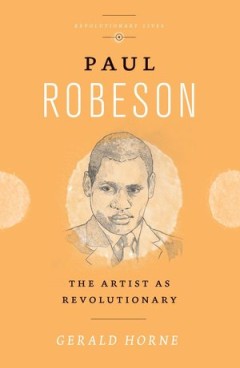
Paul Robeson : The Artist as Revolutionary
A world-famous singer and actor, a trained lawyer, an early star of American professional football and a polyglot who spoke over a dozen languages. These could be the crowning achievements of a life well-lived, yet for Paul Robeson the higher calling of social justice led him to abandon both the NFL and Hollywood and become one of the most important political activists of his generation— batt…
- Edition
- -
- ISBN/ISSN
- 978 1 7837 1755 2
- Collation
- -
- Series Title
- -
- Call Number
- 927 HOR p
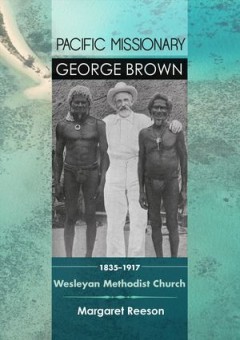
Pacific Missionary George Brown: 1835-1917 : Wesleyan Methodist Church
George Brown (1835-1917) was many things during his long life; leader in the Wesleyan Methodist Church in Australasia, explorer, linguist, political activist, apologist for the missionary enterprise, amateur anthropologist, writer, constant traveller, collector of artefacts, photographer and stirrer. He saw himself, at heart, as a missionary. The islands of the Pacific Ocean were the scene of h…
- Edition
- -
- ISBN/ISSN
- 9781921862984
- Collation
- -
- Series Title
- -
- Call Number
- 266.719 509 2 REE p
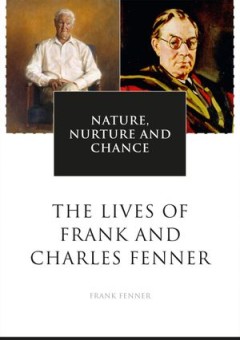
Nature, nurture and chance : the lives of Frank and Charles Fenner
Frank Fenner’s life, as it unfolds in these pages, marks a significant piece of thehistory of Australian science. His chapters are studded with the names of manyof the major players in pathology, microbiology and the rising field of virologywith whose lives he interconnected, and his mode of inserting boxed informationon these participants throughout his text provides valuable biograp…
- Edition
- -
- ISBN/ISSN
- 1 920942 63 7
- Collation
- -
- Series Title
- -
- Call Number
- 579.092 FEN n
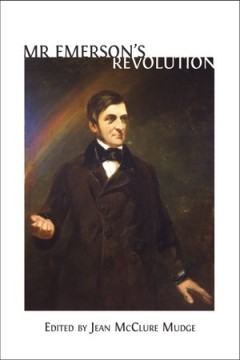
Mr. Emerson’s Revolution
This volume traces the life, thought and work of Ralph Waldo Emerson, a giant of American intellectual history, whose transforming ideas greatly strengthened the two leading reform issues of his day: abolition and women’s rights. A broad and deep, yet cautious revolutionary, he spoke about a spectrum of inner and outer realities—personal, philosophical, theological and cultural—all of whi…
- Edition
- -
- ISBN/ISSN
- 78–1-78374–099–4
- Collation
- -
- Series Title
- -
- Call Number
- 928 MIS
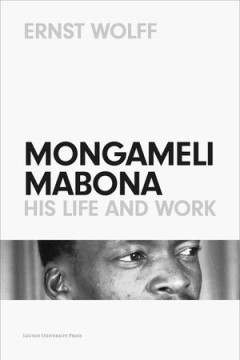
Mongameli Mabona : His Life and Work
Mongameli Anthony Mabona (1929) is a singular South African scholar with an exceptional life path. Yet, he is a wrongly forgotten figure today. British imperialism and apartheid shaped the world into which he was born and, to a large extent, these powers carved out his destiny for him. Nevertheless, a curious set of coincidences enabled him to obtain a tertiary education as a priest, to pursue …
- Edition
- -
- ISBN/ISSN
- 9789461663610
- Collation
- -
- Series Title
- -
- Call Number
- 923.7 WOL m
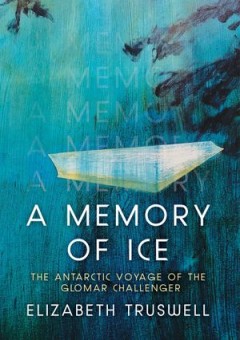
A Memory of Ice : The Antarctic Voyage of the Glomar Challenger
"In the southern summer of 1972/73, the Glomar Challenger was the first vessel of the international Deep Sea Drilling Project to venture into the seas surrounding Antarctica, confronting severe weather and ever-present icebergs. A Memory of Ice presents the science and the excitement of that voyage in a manner readable for non-scientists. Woven into the modern story is the history of early expl…
- Edition
- -
- ISBN/ISSN
- 9781760462956
- Collation
- -
- Series Title
- -
- Call Number
- 928 TRU m
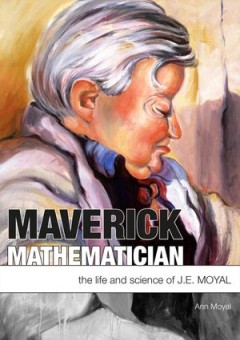
Maverick Mathematician : The Life and Science of J.E. Moyal
There is currently a recognition of the importance of the stories ofindividual scientists (outside the pantheon of giants and leading disciplinefigures) in building the history of science. Such individuals are uniquemen and women of outstanding ability, drawn from different countriesand backgrounds, some of whose personal trajectories may move outsidethe practices and paradigms o…
- Edition
- -
- ISBN/ISSN
- 1 920942 59 9
- Collation
- -
- Series Title
- -
- Call Number
- 510.92 MOY m

Ludwig Prandtl : A personal biography drawn from memories and correspondence
When Ludwig Prandtl took up the Chair of Applied Mechanics at Göttingen University in 1904, the small university town became the cradle of modern fluid mechanics and aerodynamics. Not only did Prandtl found two research institutions of worldwide renown, the Aerodynamische Versuchsanstalt (AVA) and the Kaiser-Wilhelm-Institut für Strömungsforschung, but with the so-called ‘Göttingen School…
- Edition
- -
- ISBN/ISSN
- 978-3-86395-160-3
- Collation
- -
- Series Title
- -
- Call Number
- 926 VOG p
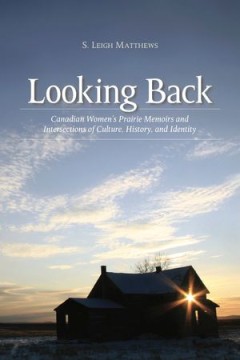
Looking Back : Canadian Women's Prairie Memoirs and Intersections of Culture,…
When we think about women settlers on the Prairies, our notions tend to veer between the nostalgic image of the “cheerful helpmate” and the grim deprivation of the “reluctant immigrant.” In this ground-breaking new study, Leigh Matthews shows how a critical approach to the life-writing of individual prairie women can broaden and deepen our understanding of the settlement era. Reopening …
- Edition
- -
- ISBN/ISSN
- 978-1-55238-595-1
- Collation
- -
- Series Title
- The West series
- Call Number
- 971.202 092 2 MAT l
 Computer Science, Information & General Works
  Philosophy & Psychology
  Religion
  Social Sciences
  Language
  Pure Science
  Applied Sciences
  Art & Recreation
  Literature
  History & Geography