Filter by
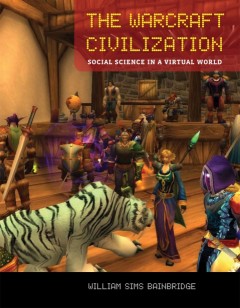
The Warcraft civilization: Social science in a virtual world
From the Publisher: World of Warcraft is more than a game. There is no ultimate goal, no winning hard, no princess to be rescued. WoW contains more than 5,000 possible quests, games within the game, and encompasses hundreds of separate parallel realms (computer serves, each of which can handle 4,000 players simultaneously). WoW is an immerse virtual world in which characters must cope in a dang…
- Edition
- -
- ISBN/ISSN
- 9780262267588
- Collation
- 1 online resource (248 pages) :illustrations
- Series Title
- -
- Call Number
- -
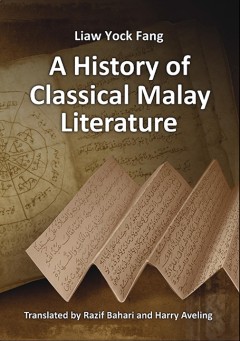
A History of Classical Malay Literature
This is a detailed, narrative-based history of Classical Malay Literature.It covers a wide range of Malay texts, including folk literature; the influence of the Indian epics and shadow theatre literature; Panji tales; the transition from Hindu to Muslim literary models; Muslim literature; framed tales; theological literature; historical literature; legal codes; and the dominant forms of poetry,…
- Edition
- -
- ISBN/ISSN
- 9789814459891
- Collation
- -
- Series Title
- Local History and Memoirs
- Call Number
- -

A History of Canberra
Designed as an 'ideal city' and emblem of the nation, Canberra has long been a source of ambivalence for many Australians. In this charming and concise book, Nicholas Brown challenges these ideas and looks beyond the clichés to illuminate the unique, layered and often colourful history of Australia's capital. Brown covers Canberra's selection as the site of the national capital, the turbulent …
- Edition
- -
- ISBN/ISSN
- 9781139196260
- Collation
- -
- Series Title
- -
- Call Number
- -
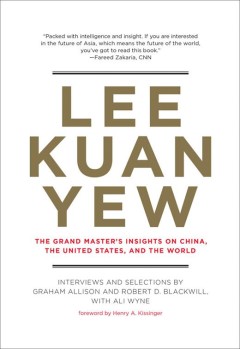
Lee Kuan Yew : the grand master's insights on China, the United States, and t…
When Lee Kuan Yew speaks, presidents, prime ministers, diplomats, and CEOs listen. Lee the founding father of modern Singapore and its prime minister from 1959 to 1990 has honed his wisdom during more than fifty years on the world stage.OCLC-licensed vendor bibliographic record.
- Edition
- -
- ISBN/ISSN
- 0262312735
- Collation
- 1 online resource (xxviiiI, 186 pages).
- Series Title
- -
- Call Number
- -
A Grammar of Kham
First published in 2002, this is a comprehensive grammatical documentation of Kham, a previously undescribed language from west-central Nepal, belonging to the Tibeto-Burman language family. The language contains a number of grammatical systems that are of immediate relevance to current work on linguistic theory, including split ergativity, a mirative system, and a rich class of derived adjecti…
- Edition
- -
- ISBN/ISSN
- 9780511486883
- Collation
- -
- Series Title
- Cambridge Grammatical Descriptions
- Call Number
- -
From Web to Workplace: Designing Open Hypermedia Systems
In this book Kaj Gronbaek and Randall H. Trigg present a set of principles for the design of open hypermedia systems and provide concrete implications of these principles for issues ranging from data structures to architectures and system integration and for settings as diverse as the World Wide Web and the workplace.OCLC-licensed vendor bibliographic record.
- Edition
- -
- ISBN/ISSN
- 9780262274456
- Collation
- 1 online resource (xviii, 386 pages) :illustrations.
- Series Title
- -
- Call Number
- -

Parenting on earth :a philosopher's guide to doing right by your kids-and eve…
"We raise our children in a fragile world. Climate change, pandemics, superbugs resistant to antibiotics. Extreme inequality, endemic poverty, institutionalized racism and sexism. What does it mean to be a "good parent" in the face of all this? This book is one woman's quest for an answer, as a philosopher and as a mother"--OCLC-licensed vendor bibliographic record.
- Edition
- -
- ISBN/ISSN
- 9780262372817
- Collation
- 1 online resource
- Series Title
- -
- Call Number
- -
Mad by the millions :mental disorders in the age of world citizenship, expert…
"How mental disorders became comparable worldwide through the making of metrics, focussing on the WHO's first international social psychiatry project"--OCLC-licensed vendor bibliographic record.
- Edition
- -
- ISBN/ISSN
- 9780262363013
- Collation
- 1 online resource.
- Series Title
- -
- Call Number
- -
Epidemic illusions :on the coloniality of global public health
A physician-anthropologist explores how public health practices--from epidemiological modeling to outbreak containment--help perpetuate global inequities. In Epidemic Illusions, Eugene Richardson, a physician and an anthropologist, contends that public health practices--from epidemiological modeling and outbreak containment to Big Data and causal inference--play an essential role in perpetuatin…
- Edition
- -
- ISBN/ISSN
- 9780262362634
- Collation
- 1 online resource
- Series Title
- -
- Call Number
- -
Plagues and the paradox of progress :why the world is getting healthier in wo…
"A Council on Foreign Relations book."Why the news about the global decline of infectious diseases is not all good. Plagues and parasites have played a central role in world affairs, shaping the evolution of the modern state, the growth of cities, and the disparate fortunes of national economies. This book tells that story, but it is not about the resurgence of pestilence. It is the story of it…
- Edition
- -
- ISBN/ISSN
- 9780262348072
- Collation
- 1 online resource (259 pages) :illustrations, maps
- Series Title
- -
- Call Number
- -
 Computer Science, Information & General Works
  Philosophy & Psychology
  Religion
  Social Sciences
  Language
  Pure Science
  Applied Sciences
  Art & Recreation
  Literature
  History & Geography