Filter by
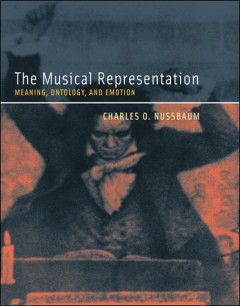
The Musical Representation: Meaning, Ontology, and Emotion
A naturalistic philosophical theory of musical representation that argues that important varieties of experience afforded by Western tonal art music since 1650 arise through the feeling of tone, the sense of movement in musical space, cognition, emotional arousal, and the engagement, by way of specific emotional responses, of deeply rooted human ideals. How human musical experience emerges f…
- Edition
- -
- ISBN/ISSN
- 9780262290784
- Collation
- -
- Series Title
- -
- Call Number
- -
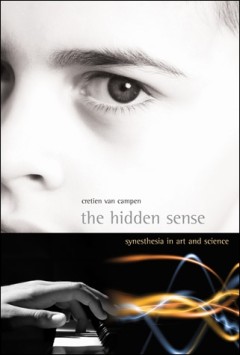
The Hidden Sense: Synesthesia in Art and Science
The uncommon sensory perceptions of synesthesia explored through accounts of synesthetes' experiences, the latest scientific research, and suggestions of synesthesia in visual art, music, and literature. What is does it mean to hear music in colors, to taste voices, to see each letter of the alphabet as a different color? These uncommon sensory experiences are examples of synesthesia, when t…
- Edition
- -
- ISBN/ISSN
- 9780262285407
- Collation
- -
- Series Title
- -
- Call Number
- -

Ingmar Bergman, Cinematic Philosopher: Reflections on His Creativity
The development of themes, motifs, and techniques in Bergman's films, from the first intimations in the early work to the consummate resolutions in the final movies. Known for their repeating motifs and signature tropes, the films of Ingmar Bergman also contain extensive variation and development. In these reflections on Bergman's artistry and thought, Irving Singer discerns distinctive them…
- Edition
- -
- ISBN/ISSN
- 9780262283687
- Collation
- -
- Series Title
- -
- Call Number
- -
Movies and the Moral Adventure of Life
Essays on small art films and big-budget blockbusters, including Antonia's Line, American Beauty, Schindler's List, and The Passion of the Christ, that view films as life lessons, enlarging our sense of human possibilities. For Alan Stone, a one-time Freudian analyst and former president of the American Psychiatric Society, movies are the great modern, democratic medium for exploring our ind…
- Edition
- -
- ISBN/ISSN
- 9780262297035
- Collation
- -
- Series Title
- -
- Call Number
- -

Not Now! Now!: Chronopolitics, Art & Research
In her divergent and interdisciplinary book Not Now! Now! Chronopolitics, Art & Research Lorenz illuminates the topic of chronopolitics through contributions from art theorists, artists, and artistic researchers. With a foreword by Elizabeth Freeman, whose work has delved extensively on such notions as temporality and body politics, Lorenz invites the reader to explore postcolonial and queer de…
- Edition
- Ed. 1
- ISBN/ISSN
- -
- Collation
- 187
- Series Title
- Publication Series of the Academy of Fine Arts Vienna, 15
- Call Number
- 701.1 NOT n
Linguistics for the Age of AI
A human-inspired, linguistically sophisticated model of language understanding for intelligent agent systems. One of the original goals of artificial intelligence research was to endow intelligent agents with human-level natural language capabilities. Recent AI research, however, has focused on applying statistical and machine learning approaches to big data rather than attempting to model w…
- Edition
- Ed. 1
- ISBN/ISSN
- 9780262363136
- Collation
- -
- Series Title
- -
- Call Number
- 400 MCS l

Artistic Cartography and Design Explorations Towards the Pluriverse
This edited volume uses an interdisciplinary approach to art and design that not only reframes but also repositions agendas and actions to address fragmented global systems. Contributors explore the pluriverse of art and design through epistemological and methodological considerations. What kinds of sustainable ways are there for knowledge transfer, supporting plural agendas, finding novel ways…
- Edition
- Ed. 1
- ISBN/ISSN
- 9781000815900, 9781032245164
- Collation
- 283
- Series Title
- Routledge Advances in Art and Visual Studies,
- Call Number
- 729.074 ART a

How and Why We Teach Shakespeare: College Teachers and Directors Share How Th…
In How and Why We Teach Shakespeare, 19 distinguished college teachers and directors draw from their personal experiences and share their methods and the reasons why they teach Shakespeare. The collection is divided into four sections: studying the text as a script for performance; exploring Shakespeare by performing; implementing specific techniques for getting into the plays; and working in d…
- Edition
- Ed. 1
- ISBN/ISSN
- 9780429283192
- Collation
- 230
- Series Title
- -
- Call Number
- 700 HOW h
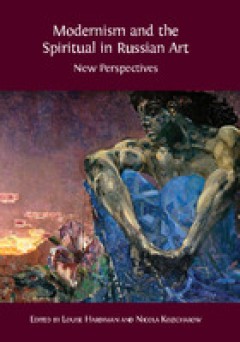
Modernism and the Spiritual in Russian Art: New Perspectives
"In 1911 Vasily Kandinsky published the first edition of ‘On the Spiritual in Art’, a landmark modernist treatise in which he sought to reframe the meaning of art and the true role of the artist. For many artists of late Imperial Russia – a culture deeply influenced by the regime’s adoption of Byzantine Orthodoxy centuries before – questions of religion and spirituality were of paramo…
- Edition
- Ed. 1
- ISBN/ISSN
- -
- Collation
- 318
- Series Title
- -
- Call Number
- 709 MOD m
Springer Handbook of Model-Based Science
This handbook offers the first comprehensive reference guide to the interdisciplinary field of model-based reasoning. It highlights the role of models as mediators between theory and experimentation, and as educational devices, as well as their relevance in testing hypotheses and explanatory functions. The Springer Handbook merges philosophical, cognitive and epistemological perspectives on mod…
- Edition
- 1
- ISBN/ISSN
- 978-3-319-30526-4
- Collation
- Mathematics
- Series Title
- -
- Call Number
- 510
 Computer Science, Information & General Works
  Philosophy & Psychology
  Religion
  Social Sciences
  Language
  Pure Science
  Applied Sciences
  Art & Recreation
  Literature
  History & Geography