Filter by

Prospects for monetary cooperation and integration in East Asia
East Asian countries were notably uninterested in regional monetary integration until the late 1990s, when the Asian financial crisis revealed the fragility of the region's exchange rate arrangements and highlighted the need for a stronger regional financial architecture. Since then, the countries of East Asia have begun taking steps to explore monetary and financial cooperation, establishing s…
- Edition
- -
- ISBN/ISSN
- 9780262265980
- Collation
- 1 online resource (xvi, 320 pages) :illustrations
- Series Title
- -
- Call Number
- -
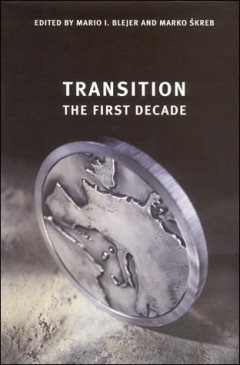
Transition: The First Decade
A comparative analysis of eleven transition economies.The former socialist countries' transition to market economies is one of the momentous transformations in modern history. The pace and degree of success have varied widely, and there is increasing divergence in performance, structure, and institutions among the transition economies. These differences are largely determined by country-specifi…
- Edition
- -
- ISBN/ISSN
- 9780262268707
- Collation
- 1 online resource (vi, 516 pages) :illustrations
- Series Title
- -
- Call Number
- -

Indecision Points: George W. Bush and the Israeli-Palestinian Conflict
"Although George W. Bush memorably declared, 'I'm the decider, ' as president he was remarkably indecisive when it came to U.S. policy toward the Israeli-Palestinian conflict. His administration's policymaking featured an ongoing clash between moderate realists and conservative hard-liners inspired by right-wing religious ideas and a vision of democracy as cure-all. Riven by these competing age…
- Edition
- -
- ISBN/ISSN
- 9780262326186
- Collation
- 1 online resource (xi, 227 pages).
- Series Title
- -
- Call Number
- -
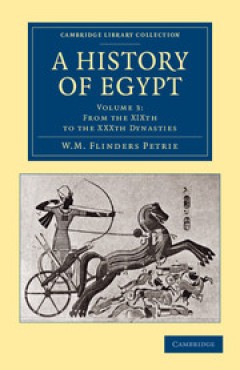
A History of Egypt
Published in six volumes between 1894 and 1905, this collection served as a valuable reference work for students and scholars of Egyptology at a time when ongoing archaeological excavations were adding significantly to the understanding of one of the world's oldest civilisations. At the forefront of this research was Sir William Matthew Flinders Petrie (1853–1942), whose pioneering methods ma…
- Edition
- -
- ISBN/ISSN
- 9781107325166
- Collation
- -
- Series Title
- Cambridge Library Collection - Egyptology
- Call Number
- -
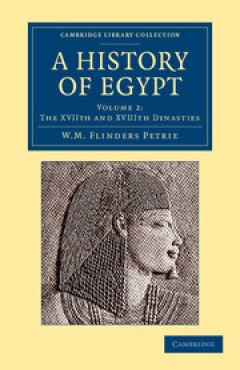
A History of Egypt
Published in six volumes between 1894 and 1905, this collection served as a valuable reference work for students and scholars of Egyptology at a time when ongoing archaeological excavations were adding significantly to the understanding of one of the world's oldest civilisations. At the forefront of this research was Sir William Matthew Flinders Petrie (1853–1942), whose pioneering methods ma…
- Edition
- -
- ISBN/ISSN
- 9781107325159
- Collation
- -
- Series Title
- Cambridge Library Collection - Egyptology
- Call Number
- -
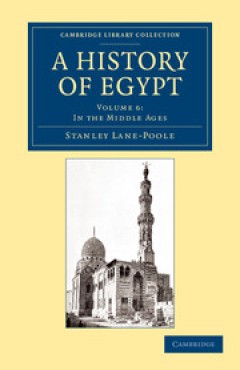
A History of Egypt
Published in six volumes between 1894 and 1905, this collection served as a valuable reference work for students and scholars of Egyptology at a time when ongoing archaeological excavations were adding significantly to the understanding of one of the world's oldest civilisations. At the forefront of this research was Sir William Matthew Flinders Petrie (1853–1942), whose pioneering methods ma…
- Edition
- -
- ISBN/ISSN
- 9781107325197
- Collation
- -
- Series Title
- Cambridge Library Collection - Archaeology
- Call Number
- -
A History of Discoveries at Halicarnassus, Cnidus and Branchidae
Charles Thomas Newton (1816–1894) was a British archaeologist specialising in Greek and Roman artefacts. He studied at Christ Church, Oxford before joining the British Museum. Newton left the Museum in 1852 to explore the coast of Asia Minor, and in 1856 he discovered the remains of the Mausoleum of Halicarnassus, one of the seven ancient wonders of the world. This study, first published in 1…
- Edition
- -
- ISBN/ISSN
- 9780511910302
- Collation
- -
- Series Title
- Cambridge Library Collection - Archaeology
- Call Number
- -
A History of Discoveries at Halicarnassus, Cnidus and Branchidae
Charles Thomas Newton (1816–1894) was a British archaeologist specialising in Greek and Roman artefacts. He studied at Christ Church, Oxford before joining the British Museum. Newton left the Museum in 1852 to explore the coast of Asia Minor, and in 1856 he discovered the remains of the Mausoleum of Halicarnassus, one of the seven ancient wonders of the world. This study, first published in 1…
- Edition
- -
- ISBN/ISSN
- 9780511910296
- Collation
- -
- Series Title
- Cambridge Library Collection - Archaeology
- Call Number
- -
Building genetic medicine :breast cancer, technology, and the comparative pol…
A comparative study of genetic testing for breast and ovarian cancer in the United States and Britain that shows the importance of national context in the development and use of science and technology even in an era of globalization.OCLC-licensed vendor bibliographic record.
- Edition
- -
- ISBN/ISSN
- 9780262281287
- Collation
- 1 online resource (x, 271 pages) :illustrations.
- Series Title
- -
- Call Number
- -
Planning, shortage, and transformation :essays in honor of J?anos Kornai
The three major themes of János Kornai's work reflected in the title of this book—planning, shortage, and transition, or transformation—figure prominently in the essays. The three major themes of János Kornai's work reflected in the title of this book—planning, shortage, and transition, or transformation—figure prominently in the essays. After a philosophical introduction by Edmond…
- Edition
- -
- ISBN/ISSN
- 9780262279222
- Collation
- 1 online resource (xvii, 439 pages) :illustrations
- Series Title
- -
- Call Number
- -
 Computer Science, Information & General Works
  Philosophy & Psychology
  Religion
  Social Sciences
  Language
  Pure Science
  Applied Sciences
  Art & Recreation
  Literature
  History & Geography