Filter by

Turning Points in the History of Mathematics
This book explores some of the major turning points in the history of mathematics, ranging from ancient Greece to the present, demonstrating the drama that has often been a part of its evolution. Studying these breakthroughs, transitions, and revolutions, their stumbling-blocks and their triumphs, can help illuminate the importance of the history of mathematics for its teaching, learning, and …
- Edition
- -
- ISBN/ISSN
- 978-1-4939-3264-1
- Collation
- -
- Series Title
- -
- Call Number
- -

Turing’s Revolution The Impact of His Ideas about Computability
This book provides an overview of the confluence of ideas in Turing’s era and work and examines the impact of his work on mathematical logic and theoretical computer science. It combines contributions by well-known scientists on the history and philosophy of computability theory as well as on generalised Turing computability. By looking at the roots and at the philosophical and technical infl…
- Edition
- -
- ISBN/ISSN
- 978-3-319-22156-4
- Collation
- -
- Series Title
- -
- Call Number
- -
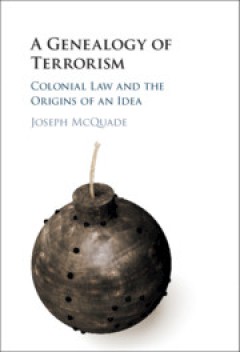
A Genealogy of Terrorism Colonial Law and the Origins of an Idea
Using India as a case study, Joseph McQuade demonstrates how the modern concept of terrorism was shaped by colonial emergency laws dating back into the nineteenth and early twentieth centuries. Beginning with the 'thugs', 'pirates', and 'fanatics' of the nineteenth century, McQuade traces the emerging and novel legal category of 'the terrorist' in early twentieth-century colonial law, ending wi…
- Edition
- -
- ISBN/ISSN
- 9781108896238
- Collation
- -
- Series Title
- -
- Call Number
- -
Art at Auction in 17th Century Amsterdam
This book exploits a trove of original documents that have survived on the auctions organized by the Orphan Chamber of Amsterdam in the first half of the 17th century. For the first time, the names of some 2000 buyers of works of art at auction in the 29 extant notebooks of the Chamber have been systematically analyzed. On the basis of archival research, data have been assembled on the occupati…
- Edition
- -
- ISBN/ISSN
- 9789053565919
- Collation
- -
- Series Title
- -
- Call Number
- -
Keeping up Her Geography
Recently, literary critics and some historians have argued that to use the language of separate spheres is to "mistake fiction for reality." However, the tendency in this criticism is to ignore the work of feminist political theorists who argue that a range of ideologies of the public and private consistently work to mask gender inequalities. In Keeping Up Her Geography, Tanya Ann Kenedy argues…
- Edition
- -
- ISBN/ISSN
- 9781135863289
- Collation
- -
- Series Title
- -
- Call Number
- -
The Disaster of the Third Princess
These seven essays by the most recent English translator of The Tale of Genji emphasize three major interpretive issues. What is the place of the hero (Hikaru Genji) in the work? What story gives the narrative underlying continuity and form? And how does the closing section of the tale (especially the ten “Uji chapters”) relate to what precedes it? Written over a period of nine years, the e…
- Edition
- -
- ISBN/ISSN
- 320414329
- Collation
- -
- Series Title
- -
- Call Number
- -

The American Revolution and the Habsburg Monarchy
In 1783, the Peace of Paris treaties famously concluded the American Revolution. However, the Revolution could have come to an end two years earlier had diplomats from the Habsburg realms—the largest continental European power—succeeded in their attempts to convene a Congress of Vienna in 1781. Bringing together materials from nearly fifty American, Austrian, Belgian, British, Czech, Dutch,…
- Edition
- -
- ISBN/ISSN
- 9780813948232
- Collation
- -
- Series Title
- -
- Call Number
- -

A Gardener's Year
H. Rider Haggard (1856–1925) is best known as the successful writer of adventure stories with exotic backgrounds such as King Solomon's Mines. However, he also served on a number of royal commissions, and in managing his wife's Norfolk estate became a recognised expert on agricultural matters. His A Farmer's Year (1898, also reissued in this series), recounts the work of the farm, together wi…
- Edition
- -
- ISBN/ISSN
- 9781139176651
- Collation
- -
- Series Title
- -
- Call Number
- -
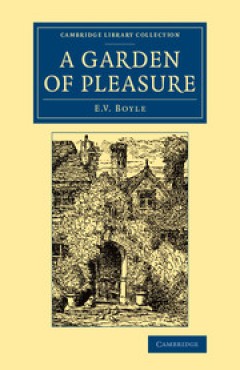
A Garden of Pleasure
Eleanor Vere Boyle (1825–1916), who re-created the gardens of Huntercombe Manor in Berkshire in the 1870s, was a talented artist as well as an author, illustrating both poetry and books for children. Coming from an aristocratic family, and in later life a friend of Queen Alexandra, she produced sketches and watercolours admired by Ruskin and Landseer, and Tennyson and Bulwer Lytton contribute…
- Edition
- -
- ISBN/ISSN
- 9781107741805
- Collation
- -
- Series Title
- Cambridge Library Collection - Botany and Horticulture
- Call Number
- -

The European Higher Education Area : Between Critical Reflections and Future …
Bridging the gap between higher education research and policy making was always a challenge, but the recent calls for more evidence-based policies have opened a window of unprecedented opportunity for researchers to bring more contributions to shaping the future of the European Higher Education Area (EHEA). Encouraged by the success of the 2011 first edition, Romania and Armenia have organised …
- Edition
- -
- ISBN/ISSN
- 9783319187679
- Collation
- XLIV, 898 halaman
- Series Title
- -
- Call Number
- 370 EUR
 Computer Science, Information & General Works
  Philosophy & Psychology
  Religion
  Social Sciences
  Language
  Pure Science
  Applied Sciences
  Art & Recreation
  Literature
  History & Geography