Filter by

Advances in Mechatronics and Biomechanics towards Efficient Robot Actuation
iological systems such as animals and humans can be energetically autonomous for several days and some species endure even longer. Today's robotic systems aim to match the physical capabilities of their biological counterparts in terms of strength, agility, and dexterity, yet fail to display untethered operating times any longer than few hours.
- Edition
- -
- ISBN/ISSN
- 9782889459117
- Collation
- -
- Series Title
- -
- Call Number
- -
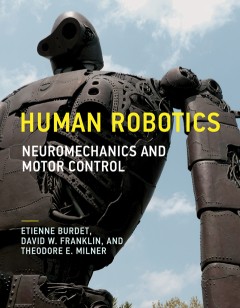
Human robotics :neuromechanics and motor control
This book proposes a transdisciplinary approach to investigating human motor control that synthesizes musculoskeletal biomechanics and neural control. The authors argue that this integrated approach -- which uses the framework of robotics to understand sensorimotor control problems -- offers a more complete and accurate description than either a purely neural computational approach or a purely …
- Edition
- -
- ISBN/ISSN
- 9780262314817
- Collation
- 1 online resource (xii, 277 pages) :illustrations
- Series Title
- -
- Call Number
- -

Contact Mechanics of Articular Cartilage Layers Asymptotic Models
This book presents a comprehensive and unifying approach to articular contact mechanics with an emphasis on frictionless contact interaction of thin cartilage layers. The first part of the book (Chapters 1-4) reviews the results of asymptotic analysis of the deformational behavior of thin elastic and viscoelastic layers. A comprehensive review of the literature is combined with the authors' ori…
- Edition
- -
- ISBN/ISSN
- 9783319200835
- Collation
- -
- Series Title
- -
- Call Number
- 571.43
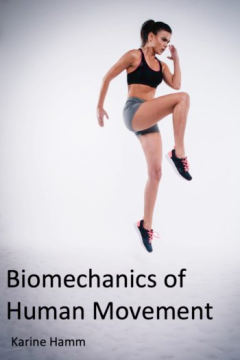
Biomechanics of Human Movement
This is a custom textbook catered to the needs of kinesiology students enrolled in a first-year biomechanics course. It has been modified from OpenStax College Physics and Anatomy and Physiology.
- Edition
- -
- ISBN/ISSN
- -
- Collation
- -
- Series Title
- -
- Call Number
- 571.43
 Computer Science, Information & General Works
  Philosophy & Psychology
  Religion
  Social Sciences
  Language
  Pure Science
  Applied Sciences
  Art & Recreation
  Literature
  History & Geography