Filter by

Constructing Space, Changing Reality of Israel through Film
This article investigates the ways in which filmmakers frame reality through cinematic space, mediating issues of conflict and reconciliation and of religion and identity(ies) within Israel. Cinematic space depicts and expresses borders through elements of film language.
- Edition
- -
- ISBN/ISSN
- -
- Collation
- 105-123
- Series Title
- -
- Call Number
- -

Constructing Muslims in France - Discourse, Public Identity, and the Politics…
The standing of French Muslims is undercut by a predominant and persistent elite public discourse that frames Muslims as failed and incomplete French citizens. This situation fosters the very separations, exclusions, and hierarchies it claims to deplore as Muslims face discrimination in education, housing, and employment.
- Edition
- -
- ISBN/ISSN
- 9781439910290;9781439910306
- Collation
- 232
- Series Title
- -
- Call Number
- -
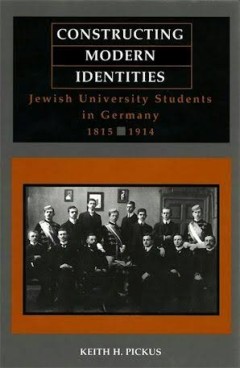
Constructing Modern Identities
The emergence of Jewish student associations in 1881 provided a forum for Jews to openly proclaim their religious heritage. By examining the lives and social dynamics of Jewish university students, Keith Pickus shows how German Jews rearranged their self-images and redefined what it meant to be Jewish
- Edition
- -
- ISBN/ISSN
- 9780814343517
- Collation
- -
- Series Title
- -
- Call Number
- -

Constructing Intersex
liegt die erste Biographieforschung mit intergeschlechtlichen Menschen im deutschsprachigen Raum vor. Auf Basis von Interviews stellt Anja Gregor heraus, welche schwerwiegenden Folgen bestimmte medizinische Pathologisierungs- und Zurichtungspraktiken für die Biographien der Betroffenen haben
- Edition
- -
- ISBN/ISSN
- 9783839432648, 9783837632644
- Collation
- 348
- Series Title
- -
- Call Number
- -
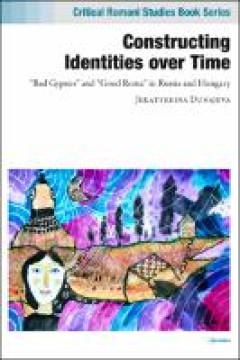
Constructing Identities over Time
Jekatyerina Dunajeva explores how two dominant stereotypes—“bad Gypsies” and “good Roma”—took hold in formal and informal educational institutions in Russia and Hungary. She shows that over centuries “Gypsies” came to be associated with criminality, lack of education, and backwardness.
- Edition
- -
- ISBN/ISSN
- -
- Collation
- -
- Series Title
- -
- Call Number
- -

Constructing and Representing Territory in Late Medieval and Early Modern Europe
In recent political and constitutional history, scholars seldom specify how and why they use the concept of territory. In research on state formation processes and nation building, for instance, the term mostly designates an enclosed geographical area ruled by a central government
- Edition
- -
- ISBN/ISSN
- 2022
- Collation
- -
- Series Title
- -
- Call Number
- -

Constructing and Experiencing Jewish Identity
Classification is an inherent feature of all societies. The distinction between Jews and non-Jews has been a major theme of Western society for over two millennia. In the middle of the twentieth century, dire consequences were associated with being Jew ish. Even after the Shoah, the labelling of Jews as “other” continued.
- Edition
- -
- ISBN/ISSN
- 9783657708406, 9783506708403
- Collation
- -
- Series Title
- -
- Call Number
- -
Constructing knowledge for food sovereignty, agroecology and biocultural dive…
Constructing knowledge for food sovereignty, agroecology and biocultural diversity
- Edition
- -
- ISBN/ISSN
- -
- Collation
- -
- Series Title
- -
- Call Number
- -
Constructing an encounter between Mikhail Bakhtin and the New Zealand band Herbs
Constructing an encounter between Mikhail Bakhtin and the New Zealand band Herbs
- Edition
- -
- ISBN/ISSN
- -
- Collation
- -
- Series Title
- -
- Call Number
- -
 Computer Science, Information & General Works
 Philosophy & Psychology
 Religion
 Social Sciences
 Language
 Pure Science
 Applied Sciences
 Art & Recreation
 Literature
 History & Geography