Filter by

Chapter 4 'Now, back to our Virchow': German Medical and Political Traditions…
When the war was over in 1945, Germany was a country with no government, little functioning infrastructure, millions of refugees and homeless people, and huge foreign armies living largely off the land. Large parts of the country were covered in rubble, with no clean drinking water, electricity, or gas. Hospitals overflowed with patients, but were short of beds, medicines, and medical personnel…
- Edition
- -
- ISBN/ISSN
- -
- Collation
- -
- Series Title
- -
- Call Number
- -
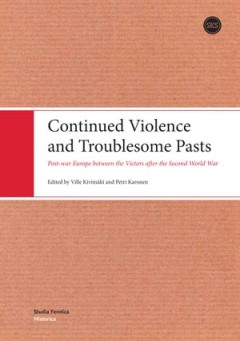
Continued Violence and Troublesome Pasts: Post-War Europe Between The Victors…
In most European countries, the horrific legacy of 1939–45 has made it quite difficult to remember the war with much glory. Despite the Anglo-American memory narrative of saving democracy from totalitarianism and the Soviet epic of the Great Patriotic War, the fundamental experience of war for so many Europeans was that of immense personal losses and often meaningless hardships. The anthology…
- Edition
- -
- ISBN/ISSN
- 9789522228574
- Collation
- -
- Series Title
- -
- Call Number
- 909.81
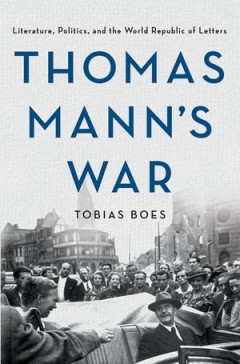
Thomas Mann's War: Literature, Politics, and the World Republic of Letters
In Thomas Mann's War, Tobias Boes traces how the acclaimed and bestselling author became one of America's most prominent anti-fascists and the spokesperson for a German cultural ideal that Nazism had perverted.Thomas Mann, winner of the 1929 Nobel Prize in literature and author of such world-renowned novels as Buddenbrooks and The Magic Mountain, began his self-imposed exile in the United State…
- Edition
- -
- ISBN/ISSN
- 9781501745010
- Collation
- -
- Series Title
- -
- Call Number
- -
 Computer Science, Information & General Works
  Philosophy & Psychology
  Religion
  Social Sciences
  Language
  Pure Science
  Applied Sciences
  Art & Recreation
  Literature
  History & Geography