Filter by
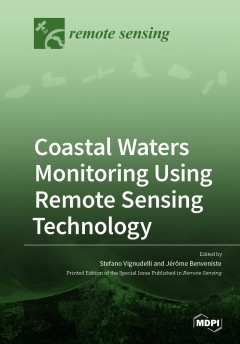
Coastal Waters Monitoring Using Remote Sensing Technology
Around 10% of the global population lives in the world’s coastal zones, mostly concentrated in the world’s largest megacities. In many regions, the population is exposed to a variety of natural hazards and space-based observations. This Special Issue will focus on the usage of remote sensing alone or in synergy with in situ measurments and modeling tools to provide precise and systematic in…
- Edition
- -
- ISBN/ISSN
- 9783036512327,
- Collation
- oer.unej.ac.id
- Series Title
- -
- Call Number
- -
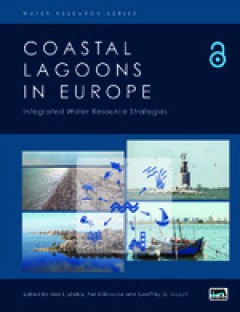
Coastal Lagoons in Europe
"Lagoons represent nearly 13% of the shoreline globally and around 5% in Europe. Coastal lagoons are shallow water bodies separated from the ocean by a barrier (e.g., narrow spit), connected at least intermittently to the ocean by one or more restricted inlets, and usually geographically oriented parallel to the shore-line. Coastal lagoons are flexible and usually able to cope with environmenta…
- Edition
- -
- ISBN/ISSN
- 9781780406282
- Collation
- oer.unej.ac.id
- Series Title
- Water Research Series,
- Call Number
- -

Coal Fly Ash Beneficiation
The present book deals with various, very significant topics of coal fly ash beneficiation, such as treatment of acid mine drainage with coal fly ash, toxic metal adsorption using coal fly ash, recovery of metals from coal fly ash and phytoreclamation of abandoned acid mine drainage site after treatment with coal fly ash, the status of research in coal fly ash utilization and applications and s…
- Edition
- -
- ISBN/ISSN
- 9789535137535
- Collation
- oer.unej.ac.id
- Series Title
- -
- Call Number
- -

Constructed and Floating Wetlands for Sustainable Water Reclamation
Constructed wetland (CW) is a popular sustainable best management practice for treating different wastewaters. While there are many articles on the removal of pollutants from different wastewaters, a comprehensive and critical review on the removal of pollutants other than nutrients that occur in agricultural field runoff and wastewater from animal facilities, including pesticides, insectic…
- Edition
- -
- ISBN/ISSN
- 9783036532141, 9783036532158
- Collation
- 214
- Series Title
- -
- Call Number
- -

Considerations with water for turfgrass in arid environments
Golf course managers in arid environments must manage every drop of water like it is their last. Water restrictions continue to tighten and water costs are increasing exponentially in many areas
- Edition
- -
- ISBN/ISSN
- 9781801465106
- Collation
- 26
- Series Title
- -
- Call Number
- -

Chapter The North-east Atlantic Margin
The Irish–Scottish margin is geologically and oceanographically heterogeneous. Source waters of subpolar and subtropical origin interact with banks, seamounts, submarine canyon systems, escarpments, and mound provinces resulting in rich and diverse benthic communities that are influenced by local and regional hydrodynamics (e.g., internal waves, tides, and local turbulence). Reef habitats for…
- Edition
- -
- ISBN/ISSN
- 9781032426969
- Collation
- -
- Series Title
- -
- Call Number
- -

Chapter Sugar Beet Tolerance to Drought: Physiological and Molecular Aspects
Drought often reduces sugar beet yield in the Balkan agroecological region. Climate forecasts indicate that this negative trend of drought periods will continue. Tolerance to drought is a complex trait, which comprises involvement of both physiological and molecular mechanisms in plants. This research was conducted on 11 sugar beet genotypes, which showed different tolerance to drought in the f…
- Edition
- -
- ISBN/ISSN
- -
- Collation
- -
- Series Title
- -
- Call Number
- -

Chapter Strengths and Weaknesses for Climate Change: Adaptation in Water Gove…
This chapter comparatively analyses the policy and governance contexts of six European regions that are affected by different hydrological impacts of climate change. The results demonstrate that a major governance strength across regions lies in the organization of management capacities to deal with existing water-related risks. For example, the Dutch context focuses on water safety, Cyprus has…
- Edition
- -
- ISBN/ISSN
- -
- Collation
- -
- Series Title
- -
- Call Number
- -
Chapter 5 Introduction to Temple Rituals
The Introduction will discuss secondary writings on temples as a place for public worship of the deity which is done through several daily, monthly and annual rituals performed in different spaces in the temple complex. Moving away from the ethnographic and textual studies of Hindu rituals which focus on contemporary ritual praxis, this chapter examines temple rituals in a historical context wi…
- Edition
- -
- ISBN/ISSN
- 9780367563158
- Collation
- -
- Series Title
- -
- Call Number
- -

Chapter 4 Nanomaterials
- Edition
- -
- ISBN/ISSN
- 9781032359014
- Collation
- -
- Series Title
- -
- Call Number
- -
- Edition
- -
- ISBN/ISSN
- 9781032359014
- Collation
- -
- Series Title
- -
- Call Number
- -
 Computer Science, Information & General Works
 Philosophy & Psychology
 Religion
 Social Sciences
 Language
 Pure Science
 Applied Sciences
 Art & Recreation
 Literature
 History & Geography