Filter by

Chapter The Creation of Two Ethnographic Identities: The Cases of the Ostrogo…
The aim of this paper is to analyse two ethnographic identities constructed for two barbarian peoples – the Ostrogoths and the Langobards. As I try to argue, the first identity was constructed to show that the Ostrogoths were a civilized people and a better version of the Romans, and moreover, this identity communicated that the Ostrogoths could not be called a barbaric and savage people. The…
- Edition
- -
- ISBN/ISSN
- 9788855186643
- Collation
- -
- Series Title
- -
- Call Number
- -

Chapter The Centres of Public Power Between the Cities and the Countryside, i…
The paper aims to illustrate, especially through the results of recent archaeological studies, the articulation and forms of the centres of public power between the Gothic and the Carolingian periods, in the dialectic between the city as a seat of the institutions and their protagonists, and the countryside, which contains the production centres and controls their resources. We will consider th…
- Edition
- -
- ISBN/ISSN
- 9788855186643
- Collation
- -
- Series Title
- -
- Call Number
- -

Chapter 4 Religious conflict, radicalism, and sexual exceptionalism in the rh…
- Edition
- -
- ISBN/ISSN
- 9781138229914
- Collation
- -
- Series Title
- -
- Call Number
- -
- Edition
- -
- ISBN/ISSN
- 9781138229914
- Collation
- -
- Series Title
- -
- Call Number
- -
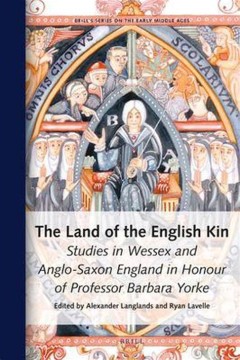
The Land of the English Kin =The Land of the English Kin
This volume draws together a series of papers that present some of the most up-to-date thinking on the history, archaeology and toponymy of Wessex and Anglo-Saxon England more broadly. In honour of one of early medieval European scholarship’s most illustrious doyennes, no less than twenty-nine contributions demonstrate the indelible impression Barbara Yorke’s work has made on her peers and …
- Edition
- -
- ISBN/ISSN
- 9789004421899
- Collation
- 718 hlm; ill., lamp.,
- Series Title
- -
- Call Number
- -
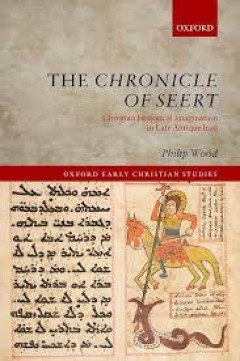
The Chronicle of Seert: Christian Historical Imagination in Late Antique Iraq
This book is a study of the cultural and political history of Christian Iraq, the Church of the East, the so–called ‘Nestorians’. This history is seen through the Chronicle of Seert, a medieval Arabic Chronicle that reuses sources written several centuries earlier. This monograph aims to isolate different layers of composition and looks for trends in the choice of material and the agenda …
- Edition
- -
- ISBN/ISSN
- 2013
- Collation
- -
- Series Title
- -
- Call Number
- -
 Computer Science, Information & General Works
  Philosophy & Psychology
  Religion
  Social Sciences
  Language
  Pure Science
  Applied Sciences
  Art & Recreation
  Literature
  History & Geography