Filter by

Wittgenstein in Exile
Klagge draws on the full range of evidence, including Wittgenstein's published work, correspondence, lectures, and conversations to place Wittgenstein's work in a broad context along a trajectory of thought that includes Job, Goethe, and Dostoyevsky.OCLC-licensed vendor bibliographic record.
- Edition
- -
- ISBN/ISSN
- 9780262300117
- Collation
- 1 online resource (x, 249 pages) :illustrations
- Series Title
- -
- Call Number
- -

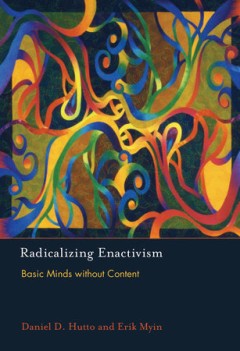
Radicalizing Enactivism: Basic Minds without Content
Hutto and Myin promote the cause of a radically enactive, embodied approach to cognition which holds that some kinds of minds - basic minds - are neither best explained by processes involving the manipulation of contents nor inherently contentful. It opposes the widely endorsed thesis that cognition always and everywhere involves content. The authors defend the counter-thesis that there can be …
- Edition
- -
- ISBN/ISSN
- 0262312174
- Collation
- 1 online resource
- Series Title
- -
- Call Number
- -

Newsgames: Journalism at Play
Journalism has embraced digital media in its struggle to survive. But most online journalism just translates existing practices to the Web: stories are written and edited as they are for print; video and audio features are produced as they would be for television and radio. The authors of Newsgames propose a new way of doing good journalism: videogames. Videogames are native to computers rather…
- Edition
- -
- ISBN/ISSN
- 9780262289221
- Collation
- -
- Series Title
- -
- Call Number
- -

Atari to Zelda: Japan's Videogames in Global Contexts
"In the early days of arcades and Nintendo, many players didn't recognize Japanese games as coming from Japan; they were simply new and interesting games to play. But since then, fans, media, and the games industry have thought further about the "Japaneseness" of particular games. Game developers try to decide whether a game's Japaneseness is a selling point or stumbling block; critics try to d…
- Edition
- -
- ISBN/ISSN
- 9780262332187
- Collation
- 1 online resource :illustrations
- Series Title
- -
- Call Number
- -

Japan's Dietary Transition and Its Impacts
An examination of the transformation of the Japanese diet from subsistence to abundance and an assessment of the consequences for health, longevity, and the environment.OCLC-licensed vendor bibliographic record.
- Edition
- -
- ISBN/ISSN
- 9780262305389
- Collation
- 1 online resource (xii, 229 pages) :illustrations.
- Series Title
- -
- Call Number
- -

Re-Emergence: Locating Conscious Properties in a Material World
Revisiting and defending a key doctrine of the once widely accepted school of philosophy known as emergentism, Gerald Vision proposes that conscious states are emergents, although they depend for their exsitence on their material bases.OCLC-licensed vendor bibliographic record.
- Edition
- -
- ISBN/ISSN
- 9780262298599
- Collation
- 1 online resource (xi, 246 pages)
- Series Title
- -
- Call Number
- -

How not to network a nation : the uneasy history of the Soviet internet
"Between 1959 and 1989, Soviet scientists and officials made numerous attempts to network their nation -- to construct a nationwide computer network. None of these attempts succeeded, and the enterprise had been abandoned by the time the Soviet Union fell apart. Meanwhile, ARPANET, the American precursor to the Internet, went online in 1969. Why did the Soviet network, with top-level scientists…
- Edition
- -
- ISBN/ISSN
- 9780262334198
- Collation
- 1 online resource (xiii, 298 pages) :illustrations, maps.
- Series Title
- -
- Call Number
- -

Modes of Creativity: Philosophical Perspectives
Philosophical reflections on creativity in science, humanities, and human experience as a whole.In this philosophical exploration of creativity, Irving Singer describes the many different types of creativity and their varied manifestations within and across all the arts and sciences. Singer's approach is pluralistic rather than abstract or dogmatic. His reflections amplify recent discoveries in…
- Edition
- -
- ISBN/ISSN
- 9780262295765
- Collation
- 1 online resource (xvi, 309 pages)
- Series Title
- -
- Call Number
- -
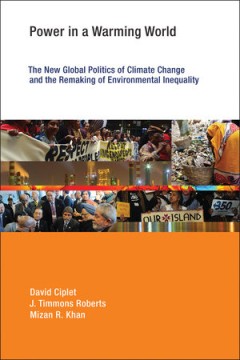
Power in a warming world :the new global politics of climate change and the r…
After nearly a quarter century of international negotiations on climate change, we stand at a crossroads. A new set of agreements is likely to fail to prevent the global climate's destabilization. Islands and coastlines face inundation, and widespread drought, flooding, and famine are expected to worsen in the poorest and most vulnerable countries. How did we arrive at an entirely inequitable a…
- Edition
- -
- ISBN/ISSN
- 9780262330039
- Collation
- 1 online resource.
- Series Title
- -
- Call Number
- -
 Computer Science, Information & General Works
 Philosophy & Psychology
 Religion
 Social Sciences
 Language
 Pure Science
 Applied Sciences
 Art & Recreation
 Literature
 History & Geography