Filter by

Advances in Ascochyta Research
Legume crops provide an excellent source of high quality plant protein and have a key role in arable crop rotations reducing the need for fertilizer application and acting as break-crops. However, these crops are affected by a number of foliar and root diseases, being ascochyta blights the most important group of diseases worldwide. Ascochyta blights are incited by different pathogens in the va…
- Edition
- -
- ISBN/ISSN
- 9782889456345
- Collation
- 195 hlm; ill., lamp.,
- Series Title
- -
- Call Number
- -
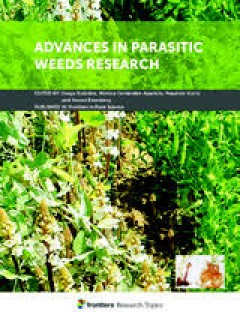
Advances in Parasitic Weeds Research
Over 4,000 plant species parasitize other plants to obtain water and nutrients. A few of these species have become weedy posing a tremendous threat to agriculture. The most damaging to annual crops are the root parasitic weeds, particularly broomrapes (Orobanche and Phelipanche spp.) and witchweeds (Striga spp.), which are extended over large agricultural areas in Europe, Africa and Asia.
- Edition
- -
- ISBN/ISSN
- 9782889456338
- Collation
- 334
- Series Title
- -
- Call Number
- -
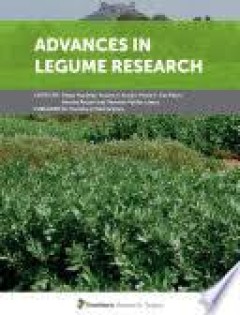
Advances in Legume Research
In a world urgently requiring more sustainable agriculture, food security and healthier diets the demand for legume crops is on the rise. This growth is fostered by the increasing need for plant protein and for sound agricultural practices that are more adaptable and environmentally sensitive
- Edition
- -
- ISBN/ISSN
- 9782889456321
- Collation
- 609
- Series Title
- -
- Call Number
- -
 Computer Science, Information & General Works
  Philosophy & Psychology
  Religion
  Social Sciences
  Language
  Pure Science
  Applied Sciences
  Art & Recreation
  Literature
  History & Geography