Filter by
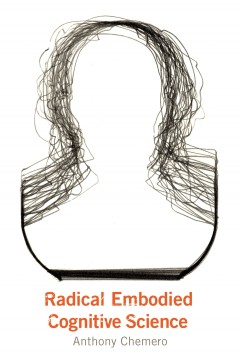
Radical embodied cognitive science
While philosophers of mind have been arguing over the status of mental representations in cognitive science, cognitive scientists have been quietly engaged in studying perception, action, and cognition without explaining them in terms of mental representation. In this book, Anthony Chemero describes this nonrepresentational approach (which he terms radical embodied cognitive science), puts it i…
- Edition
- -
- ISBN/ISSN
- 9780262258678
- Collation
- 1 online resource (xiv, 252 pages) :illustrations.
- Series Title
- -
- Call Number
- -

Wikipedia @ 20 :stories of an incomplete revolution
"Founders, contributors, scholars, teachers, and students reflect on Wikipedia's first 20 years"--OCLC-licensed vendor bibliographic record.
- Edition
- -
- ISBN/ISSN
- 0262360594
- Collation
- 1 online resource.
- Series Title
- -
- Call Number
- -

Recovering the Later Georg Lukács: A Study on the Unity of His Thought Reco…
The Hungarian literary critic, philosopher, and Marxist social theorist Georg Lukács is best known for his 1923 History and Class Consciousness, in which he offered an influential critique of reification from the standpoint of a dialectical conception of totality. While Lukács's early works have been central to the study of Marxist thought, his later works have often been dismissed as politic…
- Edition
- -
- ISBN/ISSN
- 9780262374064
- Collation
- 1 online resource
- Series Title
- -
- Call Number
- -
Now the Chips Are Down: The BBC Micro
The story of a pioneering microcomputer: its beginnings as part of a national Computer Literary Project, its innovative hardware, and its creative uses.OCLC-licensed vendor bibliographic record.
- Edition
- -
- ISBN/ISSN
- 9780262334303
- Collation
- 1 online resource (xi, 206 pages) :illustrations.
- Series Title
- -
- Call Number
- -

Convergent Evolution on Earth: Lessons for the Search for Extraterrestrial Life
Why does a sea lily look like a palm tree? And why is a sea lily called a “lily” when it is a marine animal and not a plant? Many marine animals bear a noticeable similarity in form to land-dwelling plants. And yet these marine animal forms evolved in the oceans first; land plants independently and convergently evolved similar forms much later in geologic time. In this book, George McGhee a…
- Edition
- -
- ISBN/ISSN
- 9780262354172
- Collation
- 1 online resource
- Series Title
- -
- Call Number
- -

Structures in the Mind: Essays on Language, Music, and Cognition in Honor of …
The introduction includes appreciations of Ray Jackendoff by various authors.OCLC-licensed vendor bibliographic record.
- Edition
- -
- ISBN/ISSN
- 9780262331791
- Collation
- 1 online resource (xxxiv, 404 pages) :illustrations
- Series Title
- -
- Call Number
- -

The natural resources trap :private investment without public commitment
Volatility in commodity prices has been accompanied by perpetual renegotiation of contracts between private investors in natural resource production and the governments of states with mineral and energy wealth. When prices skyrocket, governments want a larger share of revenues, sometimes to the point of nationalization or expropriation; when prices fall, larger state participation becomes a bur…
- Edition
- -
- ISBN/ISSN
- 9780262275538
- Collation
- 1 online resource (xiv, 519 pages) :illustrations
- Series Title
- -
- Call Number
- -
Minds without Meanings: An Essay on the Content of Concepts
Two prominent thinkers argue for the possibility of a theory of concepts that takes reference to be concepts' sole semantic property.OCLC-licensed vendor bibliographic record.
- Edition
- -
- ISBN/ISSN
- 9780262320320
- Collation
- 1 online resource (193 pages) :illustrations
- Series Title
- -
- Call Number
- -

Play Matters
Why play is a productive, expressive way of being, a form of understanding, and a fundamental part of our well-being."What do we think about when we think about play? A pastime? Games? Childish activities? The opposite of work? Think again: If we are happy and well rested, we may approach even our daily tasks in a playful way, taking the attitude of play without the activity of play. So what, t…
- Edition
- -
- ISBN/ISSN
- 0262325950
- Collation
- 1 online resource.
- Series Title
- -
- Call Number
- -

Money, payments, and liquidity
In Money, Payments, and Liquidity, Ed Nosal and Guillaume Rocheteau provide a comprehensive investigation into the economics of money and payments by explicitly modeling trading frictions between agents. Adopting the search-theoretic approach pioneered by Nobuhiro Kiyotaki and Randall Wright, Nosal and Rocheteau provide a logically coherent dynamic framework to examine the frictions in the econ…
- Edition
- -
- ISBN/ISSN
- 9780262298285
- Collation
- 1 online resource (xii, 369 pages) :illustrations
- Series Title
- -
- Call Number
- -
 Computer Science, Information & General Works
  Philosophy & Psychology
  Religion
  Social Sciences
  Language
  Pure Science
  Applied Sciences
  Art & Recreation
  Literature
  History & Geography