Filter by
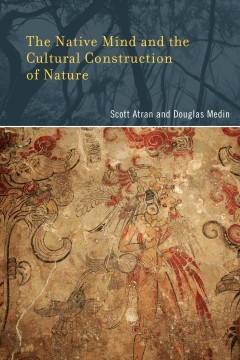
The native mind and the cultural construction of nature / The Native Mind and…
Surveys show that our growing concern over protecting the environment is accompanied by a diminishing sense of human contact with nature. Many people have little commonsense knowledge about nature - are unable, for example, to identify local plants and trees or describe how these plants and animals interact. Researchers report dwindling knowledge of nature even in smaller, nonindustrialized soc…
- Edition
- -
- ISBN/ISSN
- -
- Collation
- 1 online resource (viii, 333 pages) :
- Series Title
- -
- Call Number
- -
The art of agent-oriented modeling / The Art of Agent-Oriented Modeling
A new approach for conceptualizing and modeling multi-agent systems that consist of people, devices, and software agents.
- Edition
- -
- ISBN/ISSN
- -
- Collation
- 1 online resource (xix, 367 pages) :
- Series Title
- -
- Call Number
- -
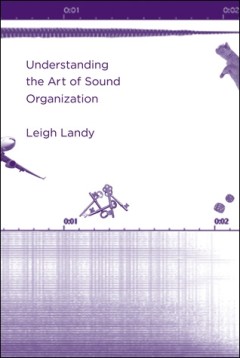
Understanding the art of sound organization / the Art of Sound Organization
The first work to propose a comprehensive musicological framework to study sound-based music, a rapidly developing body of work that includes electroacoustic art music, turntable composition, and acoustic and digital sound installations.
- Edition
- -
- ISBN/ISSN
- -
- Collation
- 1 online resource (xiii, 303 pages)
- Series Title
- -
- Call Number
- -
Cinematic mythmaking : Philosophy in Film
Mythic themes and philosophical probing in film as an art form, as seen in works of Preston Sturges, Jean Cocteau, Stanley Kubrick, and various other filmmakers. Film is the supreme medium for mythmaking. The gods and heroes of mythology are both larger than life and deeply human; they teach us about the world, and they tell us a good story. Similarly, our experience of film is both distant and…
- Edition
- -
- ISBN/ISSN
- -
- Collation
- 1 online resource (x, 245 pages).
- Series Title
- -
- Call Number
- -
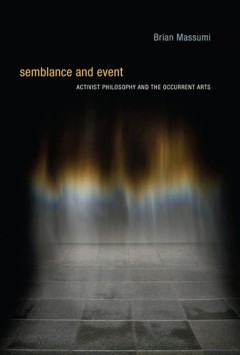
Semblance and event : Activist Philosophy and the Occurrent Arts
An investigation of the "occurrent arts" through the concepts of the "semblance" and "lived abstraction."
- Edition
- -
- ISBN/ISSN
- -
- Collation
- 1 online resource (xii, 220 pages) :
- Series Title
- -
- Call Number
- -
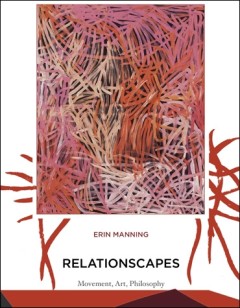
Relationscapes : Movement, Art, Philosophy
Exploring the relation between sensation and thought through the prisms of dance, cinema, art, and the new media, Manning argues for the intensity of movement, developing the concept of preacceleration which makes palpable how movement creates relational intervals out of which displacements take form.
- Edition
- -
- ISBN/ISSN
- -
- Collation
- 1 online resource (x, 268 pages) :
- Series Title
- -
- Call Number
- -
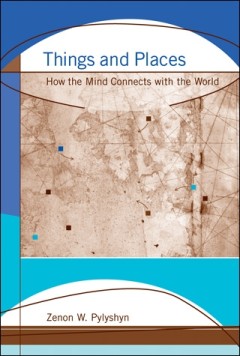
Things and places :
Problems in linking representation and perceived things in the world are discussed in light of the role played by a preconceptual indexing mechanism that functions to identify, reidentify, and track objects.
- Edition
- -
- ISBN/ISSN
- -
- Collation
- 1 online resource (xiv, 255 pages) : illustrations.
- Series Title
- -
- Call Number
- -
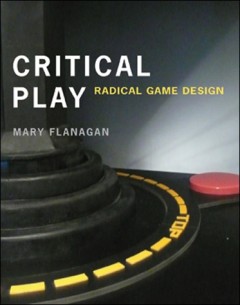
Critical play : Radical Game Design
An examination of subversive games-games designed for political, aesthetic, and social critique.
- Edition
- -
- ISBN/ISSN
- -
- Collation
- 1 online resource (vii, 353 pages) :
- Series Title
- -
- Call Number
- -
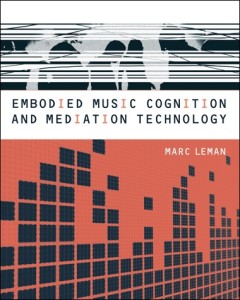
Embodied music cognition and mediation technology / Music Cognition and Media…
"Digital media handle music as encoded physical energy, but humans consider music in terms of beliefs, intentions, interpretations, experiences, evaluations, and significations. In this book, drawing on work in computer science, psychology, brain science, and musicology, Marc Leman proposes an embodied cognition approach to music research that will help bridge this gap. Assuming that the body p…
- Edition
- -
- ISBN/ISSN
- -
- Collation
- 1 online resource (xv, 297 pages) : illustrations, music
- Series Title
- -
- Call Number
- -
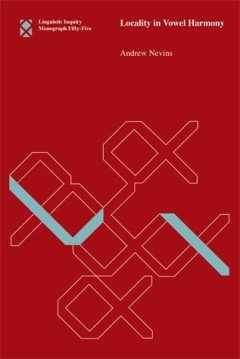
Locality in vowel harmony / Locality in Vowel Harmony
This work offers phonologists new evidence that viewing vowel harmony through the lens of relativized minimality has the potential to unify different levels of linguistic representation and different domains of empirical inquiry in a unified framework.
- Edition
- -
- ISBN/ISSN
- -
- Collation
- 1 online resource (xii, 244 pages) :
- Series Title
- -
- Call Number
- -
 Computer Science, Information & General Works
  Philosophy & Psychology
  Religion
  Social Sciences
  Language
  Pure Science
  Applied Sciences
  Art & Recreation
  Literature
  History & Geography