Filter by
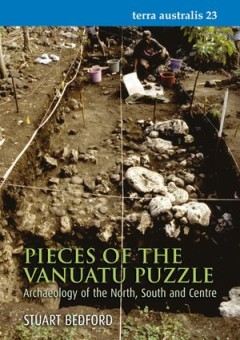
Pieces of the Vanuatu Puzzle: Archaeology of the North, South and Centre
Pieces of the Vanuatu Puzzle presents the results of the most intensive and widespread archaeological investigations in Vanuatu for more than 30 years. For the first time the results of extensive excavations carried out on three islands in the archipelago are published. The sites span from the period of initial Lapita settlement through to later cultural transformations. The research has brough…
- Edition
- -
- ISBN/ISSN
- 9781921313035
- Collation
- -
- Series Title
- -
- Call Number
- 930.1 BED p
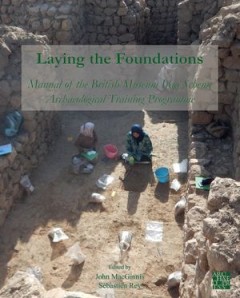
Laying the Foundations : Manual of the British Museum Iraq Scheme Archaeolog…
Laying the Foundations, which developed out of the British Museum’s ‘Iraq Scheme’ archaeological training programme, covers the core components for putting together and running an archaeological field programme. The focus is on practicality. Individual chapters address background research, the use of remote sensing, approaches to surface collection, excavation methodologies, survey with t…
- Edition
- -
- ISBN/ISSN
- 978-1-80327-141-5
- Collation
- -
- Series Title
- -
- Call Number
- 930.1 LAY
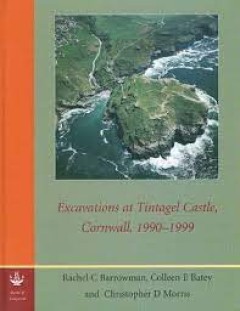
Excavations at Tintagel Castle, Cornwall, 1990-1999
Romantic rock-perched sea-girt Tintagel is a magical place that resonates with Arthurian associations - and the archaeological reality is no less intriguing than the legend. Investigation of the site began in the 1930s, when Dr Ralegh Radford uncovered remains of buildings with significant volumes of eastern Mediterranean and North African pottery of fifth- to seventh-century date, suggesting a…
- Edition
- -
- ISBN/ISSN
- 9780854312863
- Collation
- -
- Series Title
- -
- Call Number
- -
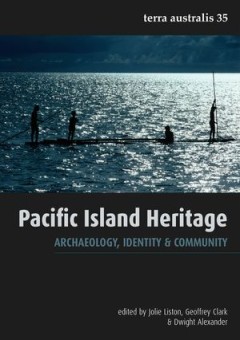
Pacific Island Heritage: Archaeology, Identity & Community
This volume emerges from a ground-breaking conference held in the Republic of Palau on cultural heritage in the Pacific. It includes bold investigations of the role of cultural heritage in identity-making, and the ways in which community engagement informs heritage management practices. This is the first broad and detailed investigation of the unique and irreplaceable cultural heritage of the P…
- Edition
- -
- ISBN/ISSN
- 9781921862489
- Collation
- -
- Series Title
- -
- Call Number
- 930.1 PAC p
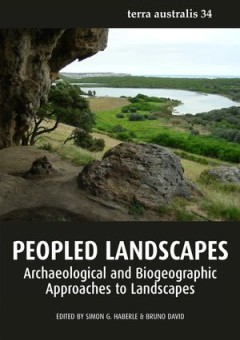
Peopled Landscapes: Archaeological and Biogeographic Approaches to Landscapes
This impressive collection celebrates the work of Peter Kershaw, a key figure in the field of Australian palaeoenvironmental reconstruction. Over almost half a century his research helped reconceptualize ecology in Australia, creating a detailed understanding of environmental change in the Late Pleistocene and Holocene. Within a biogeographic framework one of his exceptional contributions was t…
- Edition
- -
- ISBN/ISSN
- 9781921862724
- Collation
- -
- Series Title
- -
- Call Number
- 930.1 HAB p
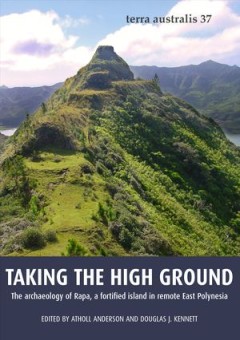
Taking the High Ground: The archaeology of Rapa, a fortified island in remote…
This volume brings the remote and little known island of Rapa firmly to the forefront of Polynesian archaeology. Thirteen authors contribute 14 chapters, covering not only the basic archaeology of coastal sites, rock shelters, and fortifications, but faunal remains, agricultural development, and marine exploitation. The results, presented within a chronology framed by Bayesian analysis, are set…
- Edition
- -
- ISBN/ISSN
- 9781922144249
- Collation
- -
- Series Title
- -
- Call Number
- 930.1 AND t
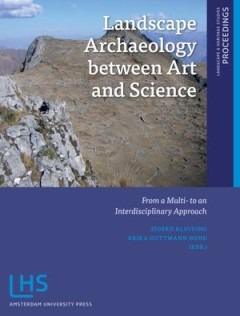
Landscape Archaeology between Art and Science
Researchers in landscape archaeology use two different definitions of landscape. One definition (landscape as territory) is used by the processual archaeologists, earth scientists, and most historical geographers within this volume. By contrast, post-processual archaeologists, new cultural geographers and anthropologists favour a more abstract definition of landscape, based on how it is perceiv…
- Edition
- -
- ISBN/ISSN
- 9789089644183
- Collation
- -
- Series Title
- -
- Call Number
- 930.1 KLU l
Regional Pathways to Complexity
Synthesizing almost 30 years of Dutch archaeological research in central and southern Italy, this book discusses and compares settlement and land use patterns from the late protohistoric period to the late Roman Republic. Exploring both social and environmental explanations, as well as interregional parallellisms and divergences, the authors take a multi-scalar approach (from micro-regional to …
- Edition
- -
- ISBN/ISSN
- 9789089642769
- Collation
- -
- Series Title
- -
- Call Number
- 930.1 BUR r
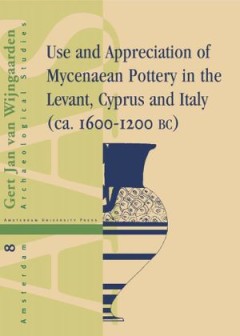
Use and Appreciation of Mycenaean Pottery in the Levant, Cyprus and Italy
Pottery made in the aegean during the Late Bronze Age has been found widely distributed in many parts of the Mediterranean. At some four hundred sites outside Greece, Mycenaean dinner and storage vessels, as well as some figurines have been discovered. As such, this class of archaeological artifacts constitutes one of the main sources by which to study Mycenaean trade and interregional contact.…
- Edition
- -
- ISBN/ISSN
- 9789053564820
- Collation
- -
- Series Title
- -
- Call Number
- 930.1 WIJ u

Holocaust Archaeologies: Approaches and Future Directions
Holocaust Archaeologies: Approaches and Future Directions aims to move archaeological research concerning the Holocaust forward through a discussion of the variety of the political, social, ethical and religious issues that surround investigations of this period and by considering how to address them. It considers the various reasons why archaeological investigations may take place and what iss…
- Edition
- -
- ISBN/ISSN
- 978-3-319-10640-3
- Collation
- XVII, 358
- Series Title
- -
- Call Number
- 900 CAR h
 Computer Science, Information & General Works
  Philosophy & Psychology
  Religion
  Social Sciences
  Language
  Pure Science
  Applied Sciences
  Art & Recreation
  Literature
  History & Geography