Filter by

A History of Christianity in India 1707–1858
This book, a sequel to Bishop Neill's A History of Christianity in India: The Beginnings to 1707, traces its subject from the death of Aurunzib to the so-called Indian Mutiny. The history of India since 1498 is of a tremendous confrontation of cultures and religions. Since 1757, the chief part in this confrontation has been played by Britain; and the Christian missionary enterprise, especially …
- Edition
- -
- ISBN/ISSN
- 9780511520563
- Collation
- -
- Series Title
- -
- Call Number
- -
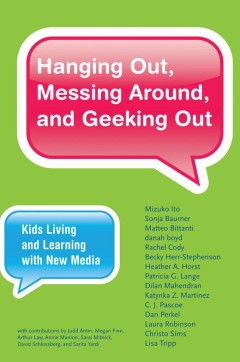
Hanging Out, Messing Around, and Geeking Out: Kids Living and Learning with N…
An examination of young people's everyday new media practices—including video-game playing, text-messaging, digital media production, and social media use. Conventional wisdom about young people's use of digital technology often equates generational identity with technology identity: today's teens seem constantly plugged in to video games, social networking sites, and text messaging. Yet t…
- Edition
- -
- ISBN/ISSN
- 9780262258920
- Collation
- -
- Series Title
- -
- Call Number
- -

Beyond the big ditch : politics, ecology, and infrastructure at the Panama Canal
This title traces the water that flows into and out from the Panama Canal to explain how global shipping is entangled with Panama's cultural and physical landscapes. By following container ships as they travel downstream along maritime routes and tracing rivers upstream across the populated watershed that feeds the canal, it explores the politics of environmental management around a waterway th…
- Edition
- -
- ISBN/ISSN
- 9780262320467
- Collation
- 1 online resource (xv, 298 pages) :illustrations, maps.
- Series Title
- -
- Call Number
- -

Truly human enhancement : a philosophical defense of limits
The transformative potential of genetic and cybernetic technologies to enhance human capabilities is most often either rejected on moral and prudential grounds or hailed as the future salvation of humanity. In this book, Nicholas Agar offers a more nuanced view, making a case for moderate human enhancement -- improvements to attributes and abilities that do not significantly exceed what is curr…
- Edition
- -
- ISBN/ISSN
- 9780262318976
- Collation
- 1 online resource (233 pages) :illustrations.
- Series Title
- -
- Call Number
- -

Who's asking? : Native science, Western science, and science education
"The answers to scientific questions depend on who's asking, because the questions asked and the answers sought reflect the cultural values and orientations of the questioner. These values and orientations are most often those of Western science. In Who's Asking?, Douglas Medin and Megan Bang argue that despite the widely held view that science is objective, value-neutral, and acultural, scient…
- Edition
- -
- ISBN/ISSN
- 9780262319430
- Collation
- 1 online resource (xii, 282 pages) :illustrations
- Series Title
- -
- Call Number
- -
New Digital Media and Learning as an Emerging Area and "Worked Examples" as O…
A proposal to move the academic area of digital media and learning toward more coherence. In this report, noted scholar James Paul Gee discusses the evolution of digital media and learning (DMAL) from its infancy as an “academic area” into a more organized field or coherent discipline. Distinguishing among academic areas, fields, disciplinary specializations, and thematic disciplines, Ge…
- Edition
- -
- ISBN/ISSN
- 9780262288255
- Collation
- -
- Series Title
- -
- Call Number
- -
Neuroscience of creativity
This volume offers a comprehensive overview of the latest neuroscientific approaches to the scientific study of creativity. In chapters that progress logically from neurobiological fundamentals to systems of neuroscience and neuro-imaging, leading scholars describe the latest theoretical, genetic, structural, clinical, functional, and applied research on the neural bases of creativity.OCLC-lice…
- Edition
- -
- ISBN/ISSN
- 9781461943266
- Collation
- 1 online resource (xv, 314 pages) :illustrations (some color).
- Series Title
- -
- Call Number
- -
Mindvaults : sociocultural grounds for pretending and imagining
An argument that the uniquely human capacities of pretending and imagining develop in response to sociocultural and sociopolitical pressures in childhood.The human mind has the capacity to vault over the realm of current perception, motivation, emotion, and action, to leap--consciously and deliberately--to past or future, possible or impossible, abstract or concrete scenarios and situations. In…
- Edition
- -
- ISBN/ISSN
- 9780262314336
- Collation
- 1 online resource (xxi, 236 pages)
- Series Title
- -
- Call Number
- -
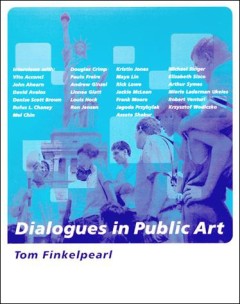
Dialogues in Public Art
"Dialogues in Public Art presents a blend of interviews with the people who create and experience public art - from an artist who mounted three bronze sculptures in the South Bronx to the bureaucrat who led the fight to have them removed; from an artist who describes his work as a "cancer" on architecture to a pair of architects who might agree with him; from a artist who formed a coalition to …
- Edition
- -
- ISBN/ISSN
- 9780262272667
- Collation
- -
- Series Title
- -
- Call Number
- -

Research misconduct policy in biomedicine : beyond the bad-apple approach
Federal regulations that govern research misconduct in biomedicine have not been able to prevent an ongoing series of high-profile cases of fabricating, falsifying, or plagiarizing scientific research. In this book, Barbara Redman looks critically at current research misconduct policy and proposes a new approach that emphasizes institutional context and improved oversight.OCLC-licensed vendor b…
- Edition
- -
- ISBN/ISSN
- 9781461944669
- Collation
- 1 online resource (xx, 184 pages).
- Series Title
- -
- Call Number
- -
 Computer Science, Information & General Works
 Philosophy & Psychology
 Religion
 Social Sciences
 Language
 Pure Science
 Applied Sciences
 Art & Recreation
 Literature
 History & Geography