Filter by
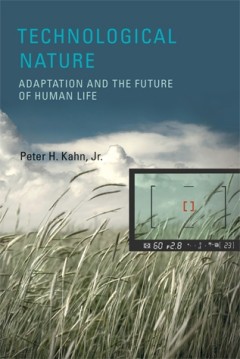
Technological Nature: Adaptation and the Future of Human Life
Why it matters that our relationship with nature is increasingly mediated and augmented by technology.OCLC-licensed vendor bibliographic record.
- Edition
- -
- ISBN/ISSN
- 9780262295253
- Collation
- 1 online resource (xviii, 230 pages) :illustrations
- Series Title
- -
- Call Number
- -
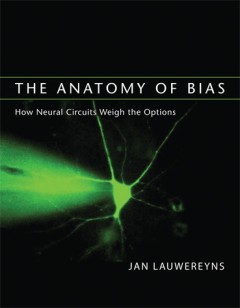
The Anatomy of Bias: How Neural Circuits Weigh the Options
In this engaging, even lyrical, book, Jan Lauwereyns examines the neural underpinnings of decision-making, using 'bias' as his core concept rather than the more common but noncommittal terms 'selection' and 'attention'.OCLC-licensed vendor bibliographic record.
- Edition
- -
- ISBN/ISSN
- 9780262277990
- Collation
- 1 online resource (xviii, 262 pages) :illustrations
- Series Title
- -
- Call Number
- -

Engineers for Change: Competing Visions of Technology in 1960s America
An account of conflicts within engineering in the 1960s that helped shape our dominant contemporary understanding of technological change as the driver of history. In the late 1960s an eclectic group of engineers joined the antiwar and civil rights activists of the time in agitating for change. The engineers were fighting to remake their profession, challenging their fellow engineers to embrace…
- Edition
- -
- ISBN/ISSN
- 9780262305181
- Collation
- 1 online resource (xvii, 286 pages) :illustrations.
- Series Title
- -
- Call Number
- -

Functions in Biological and Artificial Worlds: Comparative Philosophical Pers…
This text features investigations into the relationship between organism and artifacts from the perspective of functionality.OCLC-licensed vendor bibliographic record.
- Edition
- -
- ISBN/ISSN
- 9780262255271
- Collation
- 1 online resource (x, 302 pages) :illustrations.
- Series Title
- -
- Call Number
- -

Re-collection: Art, new media, and social memory
The first book on the philosophy and aesthetics of digital preservation examines the challenge posed by new media to our long-term social memory.OCLC-licensed vendor bibliographic record.
- Edition
- -
- ISBN/ISSN
- 9780262324083
- Collation
- 1 online resource (xii, 297 pages) :illustrations.
- Series Title
- -
- Call Number
- -

The Inner History of Devices
"For more than two decades, in such landmark studies as The Second Self and Life on the Screen, Sherry Turkle has challenged our collective imagination with her insights about how technology enters our private worlds. In The Inner History of Devices, she describes her process, an approach that reveals how what we make is woven into our ways of seeing ourselves. She brings together three traditi…
- Edition
- -
- ISBN/ISSN
- 9780262285247
- Collation
- 1 online resource (x, 208 pages)
- Series Title
- -
- Call Number
- -

Catalogue of chamber music for woodwind instruments
- Edition
- -
- ISBN/ISSN
- -
- Collation
- xx, 159 p. 26 cm
- Series Title
- -
- Call Number
- -
- Edition
- -
- ISBN/ISSN
- -
- Collation
- xx, 159 p. 26 cm
- Series Title
- -
- Call Number
- -
Three Lectures on Post-Industrial Society
Previously published in French as: Trois le?cons sur la soci?et?e post-industrielle.A noted economist analyzes the upheavals caused by revolutions in technology, labor, culture, financial markets, and globalization.In this pithy and provocative book, noted economist Daniel Cohen offers his analysis of the global shift to a post-industrial era. If it was once natural to speak of industrial socie…
- Edition
- -
- ISBN/ISSN
- 9780262266659
- Collation
- 1 online resource (106 pages)
- Series Title
- -
- Call Number
- -
The black rose and other poems
Introspection, carried too far, may wreck the soul of a man, but without it a poet is merely a versifier or an experimenter, dealing with the laboratory instead of with life. For him there must be no eternal verities except those he discovers and proves to himself. He can take nothing on trust. His life-work is to " stir the decent dust about the world " — his own world as well as that of oth…
- Edition
- -
- ISBN/ISSN
- 78512540
- Collation
- 24 p. ; 19 cm
- Series Title
- -
- Call Number
- -
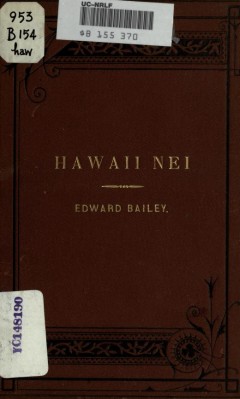
Hawaii Nei : an idyll of the Pacific isles
Alas ! the gloomy land of night, The fiery pit of baleful light ; Great clouds of smoke to heaven ascending, The melted mountains downward tending: Jehovah !— I am seized with fe
- Edition
- -
- ISBN/ISSN
- 210244788
- Collation
- 53 p. ; 19 cm,In verse,On verso of t.p.: Courier Steam Printing House, Ann Arbor,Includes glossary o
- Series Title
- -
- Call Number
- -
 Computer Science, Information & General Works
  Philosophy & Psychology
  Religion
  Social Sciences
  Language
  Pure Science
  Applied Sciences
  Art & Recreation
  Literature
  History & Geography