Filter by

Coffee wilt disease
In the early 20th century, coffee wilt disease (CWD) caused by the vascular wilt pathogen, Fusarium xylarioides, spread across Africa destroying coffee trees, reducing yields and significantly impacting producer livelihoods. Through systematic sanitation and establishment of breeding programmes in affected countries, CWD appeared to decline. However, the disease re-emerged and increased to epid…
- Edition
- -
- ISBN/ISSN
- 9781786768391
- Collation
- oer.library.unej.ac.id
- Series Title
- Burleigh Dodds Science Publishing
- Call Number
- -

Coffee wilt disease
In the early 20th century, coffee wilt disease (CWD) caused by the vascular wilt pathogen, Fusarium xylarioides, spread across Africa destroying coffee trees, reducing yields and significantly impacting producer livelihoods. Through systematic sanitation and establishment of breeding programmes in affected countries, CWD appeared to decline. However, the disease re-emerged and increased to epid…
- Edition
- -
- ISBN/ISSN
- 9781786768391
- Collation
- oer.library.unej.ac.id
- Series Title
- Burleigh Dodds Series in Agricultural Science,
- Call Number
- -
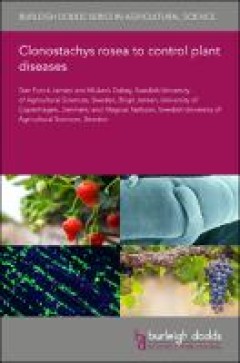
Clonostachys rosea to control plant diseases
The fungus Clonostachys rosea was recognized as an aggressive parasite on other fungi already in the late 1950s. Research into its potential use in biological control of plant diseases soon followed. Today, there are several commercial products based on C. rosea available for biocontrol applications worldwide. Although its mycoparasitic ability has attracted a lot of interest, C. rosea is now v…
- Edition
- -
- ISBN/ISSN
- 9781801462020
- Collation
- oer.unej.ac.id
- Series Title
- Burleigh Dodds Series in Agricultural Science,
- Call Number
- -

Assessing the environmental impact of ruminant production systems
One of the most common methods to evaluate environmental footprints of farming systems is life cycle assessment (LCA). Although LCA itself is suitable for and adopted by a wide range of industries far beyond agriculture, what separates agriculture, and in particular pasture-based ruminant production systems, is the high degree of uncertainties associated with physical, chemical and biological p…
- Edition
- -
- ISBN/ISSN
- 9781838798758
- Collation
- -
- Series Title
- Burleigh Dodds Series in Agricultural Science,
- Call Number
- -

Bioeconomy challenges and implementation: the European research organisations…
This book focuses on opportunities and challenges in implementing a bioeconomy strategy from a research and education perspective. It draws on contributions presented during the 30th EURAGRI annual conference held in Tartu (Estonia) in September 2016, as well as on other workshops organised as part of EURAGRI. EURAGRI is an informal gathering of EU research and higher education organisations an…
- Edition
- -
- ISBN/ISSN
- 9782759228355
- Collation
- -
- Series Title
- -
- Call Number
- Agricultural and rural economics

Biocontrol via mycoviruses: a neglected option for bioprotection?
Virocontrol involves biocontrol of pathogens via hypovirulence-causing mycoviruses. This chapter discusses the characteristics of mycoviruses and the conditions that need to be met to make a successful virocontrol agent. The chapter describes one of the success stories so far, that of virocontrol of Cryphonectria parasitica, the chestnut blight pathogen. The chapter ends by reviewing future tre…
- Edition
- -
- ISBN/ISSN
- 9781801461481
- Collation
- 44
- Series Title
- Burleigh Dodds Series in Agricultural Science
- Call Number
- -

Advances in International Rice Research
Rice provides staple food for more than 50% of the world's population and is an important crop in the world. With the new technologies such as high-throughput genome sequencing and integrated "-omis" methods applied in rice researches, great advancements have been made. This book was aimed to show a glance of new advancements in the international rice researches. The first section of the book i…
- Edition
- -
- ISBN/ISSN
- 9789535154785
- Collation
- oer.unej.ac.id
- Series Title
- -
- Call Number
- Agronomy and crop production

Advances in identifying GM plants: current frame of the detection of transgen…
Transgenic GMOs were welcomed in the 1990s due to the difficulties distinguishing genetic and epigenetic modifications from random mutagenesis and their ability to insert new nucleic sequences more rapidly but still randomly. Their marketing in Europe has been accompanied by health and environmental risk assessments, specific monitoring and traceability procedures to preserve the free choice of…
- Edition
- -
- ISBN/ISSN
- 9781801462037
- Collation
- oer.unej.ac.id
- Series Title
- Burleigh Dodds Series in Agricultural Science,
- Call Number
- Food security and supply
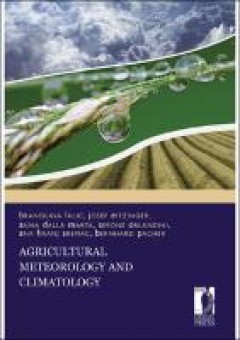
Agricultural Meteorology and Climatology
Agricultural Meteorology and Climatology is an introductory textbook for meteorology and climatology courses at faculties of agriculture and for agrometeorology and agroclimatology courses at faculties whose curricula include these subjects. Additionally, this book may be a useful source of information for practicing agronomists and all those interested in different aspects of weather and clima…
- Edition
- -
- ISBN/ISSN
- 9788864537955
- Collation
- -
- Series Title
- -
- Call Number
- -

Internetgeographien: Beobachtungen zum Verhältnis von Internet, Raum und Ges…
Dieser Band führt zwei interdisziplinäre Forschungsfelder zusammen: Die Untersuchung der gesellschaftlichen Bedeutung des Internets und die theoretische Diskussion zum Verhältnis von Raum und Gesellschaft. Die räumlichen und gesellschaftlichen Dimensionen des Internets werden anhand physisch-materieller, struktureller, perzeptiver und kommunikativer Aspekte analysiert. Sichtbar wird dabei n…
- Edition
- -
- ISBN/ISSN
- 9783515085069
- Collation
- -
- Series Title
- -
- Call Number
- -
 Computer Science, Information & General Works
 Philosophy & Psychology
 Religion
 Social Sciences
 Language
 Pure Science
 Applied Sciences
 Art & Recreation
 Literature
 History & Geography