Filter by

Brecht's Tradition
Originally published in 1967. Literary scholars often acknowledge that Brecht borrowed from a variety of traditions, including Goethe, Schiller, expressionists, naturalists, and realists, all of whom affected his work. However, they tend not to address any single tradition as exclusively Brecht's. From these various literary traditions, Brecht borrowed formal elements only; compared with other …
- Edition
- -
- ISBN/ISSN
- 9781421435503
- Collation
- 286 hlm.
- Series Title
- -
- Call Number
- -
Brecht and the Bible : A Study of Religious Nihilism and Human Weakness in Br…
This study identifies the underlying patterns of persistent biblical allusion in the work of renowned playwright Bertolt Brecht. Rather than reducing Brecht's use of the Bible to the purely satirical, the author interprets the full dramatic function of Brecht's complex use of scripture. Using examples from plays written throughout the span of Brecht's career, Murphy shows how Brecht invokes the…
- Edition
- -
- ISBN/ISSN
- -
- Collation
- 122 hlm.
- Series Title
- -
- Call Number
- -
Brecht and the Bible
This study identifies the underlying patterns of persistent biblical allusion in the work of renowned playwright Bertolt Brecht. Rather than reducing Brecht's use of the Bible to the purely satirical, the author interprets the full dramatic function of Brecht's complex use of scripture. Using examples from plays written throughout the span of Brecht's career, Murphy shows how Brecht invokes the…
- Edition
- -
- ISBN/ISSN
- -
- Collation
- 122 hlm.
- Series Title
- -
- Call Number
- -

As You Law It - Negotiating Shakespeare (Volume 15)
Shakespeare was fascinated by law, which permeated Elizabethan everyday life. The general impression one derives from the analysis of many plays by Shakespeare is that of a legal situation in transformation and of a dynamically changing relation between law and society, law and the jurisdiction of Renaissance times. Shakespeare provides the kind of literary supplement that can better illustrate…
- Edition
- -
- ISBN/ISSN
- 9783110591514
- Collation
- -
- Series Title
- -
- Call Number
- Literary studies: plays and playwrights
Acting Emotions
Actors and actresses play characters such as the embittered Medea, or the lovelorn Romeo, or the grieving and tearful Hecabe. The theatre audience holds its breath, and then sparks begin to fly. But what about the actor? Has he been affected by the emotions of the character he is playing? What's going on inside his mind? The styling of emotions in the theatre has been the subject of heated deba…
- Edition
- -
- ISBN/ISSN
- 9789053564448
- Collation
- oer.unej.ac.id
- Series Title
- -
- Call Number
- Plays, playscripts
The genesis of animal play : testing the limits
In The Genesis of Animal Play, Gordon Burghardt examines the origins and evolution of play in humans and animals. He asks what play might mean in our understanding of evolution, the brain, behavioral organization, and psychology. Is play essential to development? Is it the driving force behind human and animal behavior? What is the proper place for the study of play in the cognitive, behavioral…
- Edition
- -
- ISBN/ISSN
- 9780262269551
- Collation
- 1 online resource (xvi, 501 pages) : illustrations
- Series Title
- -
- Call Number
- 570 BUR g
Fun, taste, & games :an aesthetics of the idle, unproductive, and otherwise p…
Reclaiming fun as a meaningful concept for understanding games and play. "Fun" is somewhat ambiguous. If something is fun, is it pleasant Entertaining Silly A way to trick students into learning Fun also has baggage--it seems inconsequential, embarrassing, child's play. In Fun, Taste, & Games , John Sharp and David Thomas reclaim fun as a productive and meaningful tool for understanding and app…
- Edition
- -
- ISBN/ISSN
- 9780262351249
- Collation
- 1 online resource (xiv, 239 pages) :illustrations.
- Series Title
- -
- Call Number
- -
Play Matters
Why play is a productive, expressive way of being, a form of understanding, and a fundamental part of our well-being."What do we think about when we think about play? A pastime? Games? Childish activities? The opposite of work? Think again: If we are happy and well rested, we may approach even our daily tasks in a playful way, taking the attitude of play without the activity of play. So what, t…
- Edition
- -
- ISBN/ISSN
- 0262325950
- Collation
- 1 online resource.
- Series Title
- -
- Call Number
- -
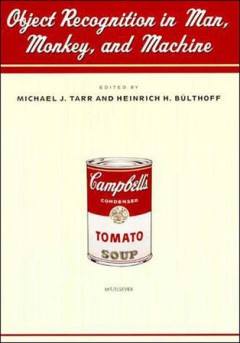
Object recognition in man, monkey, and machine
The contributors bring a wide range of methodologies to bear on the common problem of image-based object recognition. These interconnected essays on three-dimensional visual object recognition present cutting-edge research by some of the most creative neuroscientific, cognitive, and computational scientists in the field. Cassandra Moore and Patrick Cavanagh take a classic demonstration, t…
- Edition
- -
- ISBN/ISSN
- 9780262287609
- Collation
- 1 online resource (217 pages) :illustrations.
- Series Title
- -
- Call Number
- -
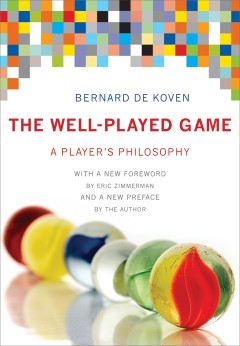
The well-played game : a player's philosophy
"In The Well-Played Game, games guru Bernard De Koven explores the interaction of play and games, offering players -- as well as game designers, educators, and scholars -- a guide to how games work. De Koven's classic treatise on how human beings play together, first published in 1978, investigates many issues newly resonant in the era of video and computer games, including social gameplay and …
- Edition
- -
- ISBN/ISSN
- 9781461939450
- Collation
- 1 online resource
- Series Title
- -
- Call Number
- -
 Computer Science, Information & General Works
  Philosophy & Psychology
  Religion
  Social Sciences
  Language
  Pure Science
  Applied Sciences
  Art & Recreation
  Literature
  History & Geography