Filter by

Contextualizing Practical Knowledge in Early Modern Europe
The topic of this book is practical knowledge in early modern Europe, interpreted widely as recipes containing art procedures or medical panaceas between 1400 and 1700. In this book, the 1) origin or creation, 2) transmission or dissemination, and 3) use or consumption are key subjects for understanding the place of practical knowledge in early modern European society. After a historiographical…
- Edition
- -
- ISBN/ISSN
- 9783631788912
- Collation
- -
- Series Title
- -
- Call Number
- -
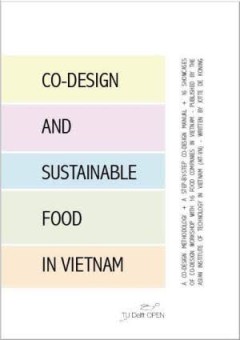
Co-design and Sustainable Food in Vietnam
This "Co-design of Sustainable Food in Vietnam" booklet is written for everyone, especially companies, consumers and experts, who want to organize a co-design workshop in Vietnam, with focus on food and sustainability. It includes the methodology, a step-by-step facilitation manual and the results of implemented co-design workshops. We hope that readers will be equipped with enough knowledge an…
- Edition
- -
- ISBN/ISSN
- -
- Collation
- oer.unej.ac.id
- Series Title
- -
- Call Number
- -
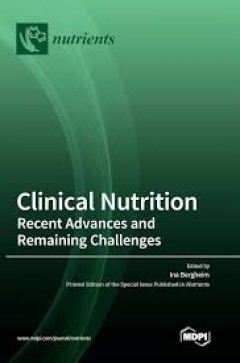
Clinical Nutrition: Recent Advances and Remaining Challenges
malnutrition; cirrhosis; nutritional screening; nutritional assessment; gut–liver axis; macronutrients; micronutrients; dysbiosis; diet; enteral nutrition; inflammatory bowel disease; nutrition; nutritional therapy; prevention; artificial nutrition; nasogastric feeding; nasogastric tube; palliative care; calcium oxalate stone formation; dietary assessment; fatty acids; fluid; oxalate; protein…
- Edition
- -
- ISBN/ISSN
- 9783036548395,
- Collation
- oer.unej.ac.id
- Series Title
- -
- Call Number
- -

Consumer Preference and Acceptance of Food Products
Acceptance and preference of the sensory properties of foods are among the most important criteria determining food choice. Sensory perception and our response to food products and finally food choice itself are affected by a myriad of intrinsic as well as extrinsic factors.
- Edition
- -
- ISBN/ISSN
- 9783039436958, 9783039436965
- Collation
- 236
- Series Title
- -
- Call Number
- -
Chapter The “dining table revolution” in China: the question read through…
Food is not only the source of nutrition for humans but also plays various roles in our daily lives, beliefs, and relationship. In China, one of the fundamental cultural elements is the sharing of food. Typically, the courses are served in the center of the table from which guests serve themselves on their plates or serve guests using their chopsticks. With the COVID-19 outbreak, people were ad…
- Edition
- -
- ISBN/ISSN
- 9788855185066
- Collation
- -
- Series Title
- -
- Call Number
- -

Chapter 5 Introduction to Temple Rituals
The Introduction will discuss secondary writings on temples as a place for public worship of the deity which is done through several daily, monthly and annual rituals performed in different spaces in the temple complex. Moving away from the ethnographic and textual studies of Hindu rituals which focus on contemporary ritual praxis, this chapter examines temple rituals in a historical context wi…
- Edition
- -
- ISBN/ISSN
- 9780367563158
- Collation
- -
- Series Title
- -
- Call Number
- -

Alternative Food Politics
In many cities, new uses of space for the purpose of growing food have emerged in the fi rst two decades of the new millennium. They can’t be classifi ed into any traditional spatial category.
- Edition
- -
- ISBN/ISSN
- 9780367674229, 9780367674267
- Collation
- 28
- Series Title
- -
- Call Number
- -

Chapter 4 Food and locality : Heritagization and commercial use of the past
Food Heritage and Nationalism in Europe contends that food is a fundamental element of heritage, and a particularly important one in times of crisis. Arguing that food, taste, cuisine and gastronomy are crucial markers of identity that are inherently connected to constructions of place, tradition and the past, the book demonstrates how they play a role in intangible, as well as tangible, herita…
- Edition
- -
- ISBN/ISSN
- -
- Collation
- 18
- Series Title
- Critical Heritages of Europe
- Call Number
- -

FOOD AS COMMONS
While the rich eat healthy fruit salads of organic mangoes in Stockholm and Palo Alto, poor people (in the North and in the South) are fed, when at all, with industrially made high-calorie junk food, such as chicken nuggets or cheeseburgers, that produce, among other things, resistance to antibiotics that are widely given to the unlucky martyrs of this capitalist food chains
- Edition
- -
- ISBN/ISSN
- 9781138062627; 9781315161495
- Collation
- 24
- Series Title
- -
- Call Number
- -

The cooperation dilemma: can agricultural cooperatives sustainably survive in…
Agricultural cooperatives in Spain have a variety of legal forms. Having diversity in organisational models, types of farmers and cultivated foods is key for food security and sustainability. In this section I introduce three types of alternative farming cooperative models and discuss their potential to contribute to food security: multi-stakeholder cooperatives, communal land use cooperativ…
- Edition
- -
- ISBN/ISSN
- 9781800378445
- Collation
- -
- Series Title
- -
- Call Number
- -
 Computer Science, Information & General Works
 Philosophy & Psychology
 Religion
 Social Sciences
 Language
 Pure Science
 Applied Sciences
 Art & Recreation
 Literature
 History & Geography